
You'll find wulfenite is a vibrant lead molybdate mineral (PbMoO4), renowned for its eye-catching orange, yellow, and red hues. Its distinctive pyramidal and tabular forms are not just visually appealing but also symbolize wealth and creativity, deeply rooted in ancient Roman art and Egyptian adornments. By engaging the solar plexus and sacral chakras, wulfenite can bolster emotional resilience and creativity, making it a valuable tool against self-doubt and procrastination. Its synergy with citrine enhances these effects, particularly benefiting Sagittarius personalities by promoting authenticity and growth. Now, explore how these properties amplify personal and spiritual pursuits.
Key Takeaways
- Wulfenite engages the solar plexus and sacral chakras for emotional resilience, creativity, and confidence.
- It promotes inspiration, persistence, and helps overcome self-doubt and procrastination in creative endeavors.
- The mineral is historically significant, symbolizing wealth and used in ancient Roman and Egyptian cultures.
- Wulfenite resonates with Sagittarius, enhancing exploration, curiosity, and personal growth as a November birthstone.
- It pairs well with Citrine for activating the solar plexus chakra, fostering creativity and manifestation.
Crystal / Mineral Overview and Meaning
Renowned for its vibrant colors and distinctive crystal formations, wulfenite captivates both mineral enthusiasts and collectors. As a lead molybdate mineral, wulfenite's chemical composition is represented by the formula PbMoO4. Its most striking feature is its crystal structure, which often manifests in unique pyramidal and tabular forms. These crystals are mainly found in warm hues such as orange, yellow, and red, adding to their allure.
Discovered in 1845 by Wilhelm Karl von Haidinger, wulfenite was aptly named after Franz Xaver von Wulfen, whose research on lead ores was pioneering. You'll find wulfenite primarily in oxidized zones of hydrothermal lead veins. Remarkable deposits can be explored in the Red Cloud Mine in Arizona and Los Lamentos in Mexico. These locations have become significant for sourcing high-quality wulfenite crystals.
With a Mohs hardness of 2.5-3, wulfenite is fairly soft, necessitating careful handling to avoid damage. This makes it more appropriate for display purposes rather than for jewelry intended for daily wear. Associated with the zodiac sign Sagittarius, wulfenite is believed to enhance exploration and curiosity, resonating with individuals drawn to philosophical inquiries.
Boosts Creativity and Inspiration

As you explore the potential of Wulfenite, often referred to as Yellow Lead Ore, you'll find its capacity to enhance emotional resilience and activate creativity to be particularly compelling. By engaging with the solar plexus and sacral chakras, Wulfenite stimulates not only artistic expression but also the underlying emotional strength necessary for sustained creative effort. For best results, consider purifying your Wulfenite under moonlight, a practice believed to rejuvenate its energetic properties, thereby amplifying your creative and inspirational pursuits.
Called Yellow Lead Ore
Wulfenite, often referred to as yellow lead ore, is a mineral celebrated for its vibrant yellow and orange hues, which are scientifically linked to its molybdate composition. This unique coloration is not just visually appealing but is also believed to greatly boost creativity and inspiration in the creative field. The connection of wulfenite to the sacral chakra enhances one's creative expression and personal will, making it a valuable ally for artists, writers, and musicians.
The elemental linkage to Fire symbolizes passion and transformation, essential qualities for anyone engaged in artistic pursuits. This fiery affiliation empowers you to transcend self-defeating attitudes and procrastination, catalyzing action toward your creative projects.
| Aspect | Description | Benefit |
|---|---|---|
| Coloration | Vibrant yellow and orange hues | Creativity boost |
| Chakra Connection | Sacral chakra | Enhanced expression |
| Elemental Symbol | Fire | Passion and action |
In meditation practices, wulfenite aids in setting intentions for creative flow, making it an ideal companion in spaces dedicated to artistic work. Its energy facilitates the elimination of barriers to creativity, allowing you to manifest your ideas with clarity and purpose. This powerful mineral is not just a decorative stone but a catalyst for transformation and inspiration in the creative field.
Enhances Emotional Resilience
Building upon its reputation as a catalyst for creativity, the mineral also plays a pivotal role in enhancing emotional resilience. Wulfenite's ability to boost inspiration and persistence makes it an invaluable tool for artists and creatives. By activating the sacral and solar plexus chakras, it fosters personal power and confidence, essential elements for overcoming creative blocks and emotional hurdles. Its unique vibrational resonance, due to its Mohs hardness of 2.5-3, facilitates a connection to higher energies, enhancing clarity of thought and stimulating innovative ideas.
Wulfenite is particularly effective in combating self-doubt and procrastination, two significant barriers to emotional resilience. Its vibrant hues—often orange and yellow—symbolize joy and creativity, serving as a visual reminder of the potential for new ideas and solutions. This gemstone encourages you to embrace your creative potential and take actionable steps toward achieving your aspirations.
- Inspiration and Persistence: Wulfenite's energy promotes continuous creative flow, helping you persist through challenges.
- Emotional Resilience: By fostering confidence and clarity, it empowers you to face emotional challenges head-on.
- Creative Potential: Its vibrant colors energize your creative pursuits, enhancing artistic expression in various contexts.
Activate Creativity With Wulfenite
With the groundwork laid in understanding wulfenite's influence on the sacral and solar plexus chakras, it's now pertinent to explore how this mineral actively boosts creativity and inspiration. Wulfenite is a potent manifestation stone, ideal for artists, musicians, and writers. Its vibrant orange and red hues serve as more than mere aesthetic pleasure; they stimulate passion and motivation, vital catalysts for generating innovative ideas. By activating the sacral and solar plexus chakras, wulfenite enhances personal will and confidence, creating a seamless flow of creative energy and promoting clarity in your artistic pursuits.
| Aspect | Influence of Wulfenite | Result |
|---|---|---|
| Chakra Activation | Sacral & Solar Plexus | Increased energy flow |
| Color Stimulation | Orange & Red Hues | Ignites creativity & passion |
| Creative Workspace | Enhanced Vibrational Energy | Elevated idea generation |
Wulfenite's influence doesn't stop at energizing creativity; it encourages original thought by helping you overcome self-doubt and procrastination. This fosters a proactive attitude, essential for transforming ideas into tangible outcomes. Placing wulfenite in your creative workspace can further enhance the flow of ideas, elevating the vibrational energy to support a productive and inspired environment.
Purify With Moonlight Exposure
Regularly exposing wulfenite to moonlight serves as an effective method to purify and enhance its inherent properties, particularly its capacity to boost creativity and inspiration. This moonlight purification process aligns with the lunar cycle, ideally performed during the full moon when lunar energies are at their apex. By doing so, you not only cleanse the stone of any accumulated negativity but also amplify its creative energies. This makes wulfenite exceptionally beneficial for artists and creative professionals seeking to enhance their imaginative output.
The moon's influence heightens the stone's vibrational frequency, promoting clarity and focus, essential for a fluid flow of ideas. As you incorporate moonlight purification into your routine, the stone becomes a more effective conduit for manifestation and artistic expression. Regular exposure to moonlight guarantees the wulfenite remains energetically potent, maintaining the clarity needed for mental acuity and creativity.
This practice allows a deeper connection with the stone, optimizing its benefits. The consistent purification through moonlight guarantees that wulfenite operates at its full potential, facilitating a seamless integration of creative energies into your projects and endeavors, thereby elevating your artistic and inspirational pursuits.
Pairs Well With Citrine

Wulfenite, renowned for its vibrant energy, often pairs synergistically with Citrine to enhance creativity and manifestation, making them a compelling duo for artists and innovators enthusiastic to bring their ideas to fruition. Wulfenite crystals, with their bright orange hue, stimulate the mind and ignite the imagination, revealing new pathways for self-expression. When combined with Citrine, a stone known for its properties of abundance and prosperity, the resulting synergy amplifies your motivation and focus. This pairing supports clarity in achieving goals by activating the solar plexus chakra, thereby empowering your personal will and confidence.
These crystals work together to overcome procrastination and self-doubt, which can be roadblocks in artistic or innovative endeavors. Such a powerful combination not only aids in emotional healing by fostering a positive outlook but also enhances energy and passion. This is particularly beneficial in romantic relationships and creative projects, as it helps balance sexual energies—reinvigorating both personal and creative pursuits. By incorporating Wulfenite and Citrine into your routine, you can harness their combined energies to elevate your creative potential and manifest your aspirations more effectively, leading to a fulfilling and dynamic personal and professional life.
Zodiac Compatibility Insights

When considering the zodiac signs most compatible with Wulfenite, you'll find that its fiery essence aligns primarily with Sagittarius, offering support in their pursuit of knowledge and adventure. As a November birthstone, Wulfenite further enhances the innate traits of Sagittarians, fostering an environment conducive to authenticity and philosophical exploration. Its elemental Fire affinity ignites passion and transformation, making it an ideal companion for those seeking to overcome self-doubt and embrace their adventurous spirit.
Zodiac Signs Best Suited

For those seeking to understand the astrological compatibility of Wulfenite, the gemstone's synergy with Sagittarius is particularly significant. Wulfenite is intrinsically linked to the adventurous spirit of Sagittarius, enhancing traits such as exploration and curiosity. This vibrant crystal resonates with the fiery energy that defines Sagittarians, invigorating their passion for life and new experiences. Known for their expansive nature, Sagittarians are driven by a quest for personal growth and authenticity, and Wulfenite serves as a powerful ally in these pursuits. The stone's properties align seamlessly with the philosophical undertones of Sagittarius, promoting truth-seeking and aiding in connecting with one's higher self.
Moreover, Wulfenite supports Sagittarians in manifesting their dreams and enhancing creative endeavors. Its energy encourages them to initiate personal journeys, providing a boost in both confidence and clarity. By harnessing Wulfenite's properties, Sagittarians can channel their innate desire for exploration into productive and fulfilling paths. This gemstone acts as a catalyst, allowing them to navigate life's adventures with a clear and focused mind. Ultimately, Wulfenite's compatibility with Sagittarius lies in its ability to amplify the sign's inherent qualities, making it particularly well-suited for those born under this zodiac.
Birthstone for November Babies

As you explore the significance of November birthstones, you'll find that Wulfenite stands out not just for its vibrant hues but also for its inherent energy that aligns with those born in this month. Wulfenite is particularly resonant with Sagittarians, whose birthdays fall between November 22 and December 21. This gemstone enhances their natural traits of exploration and curiosity, making it an ideal zodiac stone. The vivid orange and yellow colors of wulfenite are not just visually striking; they symbolize joy and creativity, qualities that harmonize with the energetic spirit of November-born individuals.
In terms of personal growth, wulfenite acts as a powerful talisman. It symbolizes passion and liveliness, encouraging November babies to pursue their goals with vigor. Its association with the solar plexus and sacral chakras further supports emotional healing and motivation, key aspects for anyone seeking to navigate life's challenges. Additionally, wulfenite promotes authenticity and truth-seeking, guiding you to approach your personal journey with clarity and determination. Its energies facilitate a deeper understanding of oneself, aligning perfectly with the inherent drive of November individuals to explore both the external world and their inner selves.
Elemental Affinities of Wulfenite
Exploring the elemental affinities of Wulfenite reveals its profound impact on zodiac compatibility, particularly for those under Sagittarius. As a mineral associated with the Fire element, Wulfenite channels passion, transformation, and creativity. Sagittarius individuals, known for their adventurous spirit and insatiable curiosity, will find their inherent traits amplified when aligned with Wulfenite. The mineral's fiery nature fuels their exploratory desires, enhancing their drive to seek out new experiences and knowledge.
Wulfenite's connection to the planet Mars adds another layer of influence, imbuing Sagittarians with action-oriented energy, assertiveness, and the courage necessary to achieve their ambitions. This planetary link complements the expansive, truth-seeking nature of Sagittarius, encouraging authenticity and philosophical pursuits in their personal journeys. In addition, Wulfenite activates the solar plexus and sacral chakras, fostering personal will, confidence, and energy. This activation aids in emotional healing, providing a balanced approach to life's challenges.
Incorporating Wulfenite into your life can potentially enhance Sagittarius's natural tendencies, offering a deeper sense of purpose and clarity. Its elemental affinities make it an ideal companion for those seeking to harness their inner fire, embrace change, and commence transformative journeys.
Famous Wulfenite Specimens Found

When exploring the renowned wulfenite specimens, you'll find the Red Cloud Mine in Arizona at the forefront, celebrated for its vibrant orange and yellow crystals highly coveted by collectors. Historical evidence suggests that wulfenite was employed in ancient Egyptian amulets, linking its unique properties with cultural significance. Additionally, Cleopatra's adornments potentially featured wulfenite, underscoring its allure and value throughout history.
Red Cloud Mine Specimens
How remarkable is the allure of wulfenite specimens from the Red Cloud Mine in Arizona? This location is renowned for producing some of the most vibrant and high-quality wulfenite crystals, primarily recognized for their striking orange to yellow hues. The tabular crystal formations are a signature of Red Cloud Mine wulfenite, often displaying excellent luster and remarkable clarity. These attributes make them highly desirable among mineral collectors and enthusiasts.
The crystals from this mine can reach impressive sizes, with some specimens measuring several centimeters across. Such dimensions allow for intricate crystal shapes that are both aesthetically pleasing and scientifically significant. The presence of associated minerals like pyromorphite and galena further enhances their visual appeal and adds complexity to their geological story. This association not only contributes to their beauty but also to their desirability in collections.
Historically, wulfenite from the Red Cloud Mine has been a staple at mineral shows and exhibitions. Its exceptional quality and historical significance contribute to its high market value. Collectors find these specimens not just appealing but also a sound investment, given their enduring popularity and the mine's legacy in mineralogy.
Ancient Egyptian Amulets Origin
While the Red Cloud Mine's vibrant wulfenite specimens captivate modern collectors, the mineral's allure extends back to ancient times, particularly in ancient Egyptian culture. The ancient Egyptians highly valued wulfenite for its striking colors and perceived mystical properties. They believed it possessed protective and healing qualities, often embedding it into amulets and talismans. These artifacts weren't mere decorations; they symbolized liveliness and strength, fundamental elements in their spiritual and daily lives.
Notable wulfenite specimens have been unearthed at archaeological sites, revealing its extensive use in jewelry and ceremonial objects. Such items were thought to attract positive energy and repel negativity, essential in the Egyptians' spiritual rituals. Wulfenite's connection to the earth and its vibrant hues resonated harmoniously with the life force concept, enhancing its appeal as a protective charm.
The mineral's presence in ancient Egyptian tombs underscores its significant role in their belief systems. These discoveries highlight wulfenite's importance in spiritual practices related to life, death, and the afterlife. As a mineral cherished for its beauty and powers, wulfenite's historical usage reflects its enduring legacy in the domain of ancient Egyptian spirituality.
Cleopatra's Wulfenite Adornments
In ancient Egypt, Cleopatra's affinity for gemstones extended to wulfenite, a mineral prized for its vibrant orange and yellow hues, which complemented her regal aesthetic. This mineral's crystalline structure and vivid coloration made it a favored choice for royal adornments, enhancing Cleopatra's image of power and divine beauty. Archaeological evidence shows that wulfenite was not merely ornamental; it held significant symbolic value, representing liveliness and passion. Such attributes likely appealed to Cleopatra, aligning with her legendary allure and potent leadership.
Notable wulfenite specimens discovered in Egyptian tombs highlight its esteemed status. These artifacts suggest the mineral's role in spiritual rituals, possibly aiding in personal empowerment and transformation. The allure of wulfenite's striking hues, particularly in Cleopatra's era, was further emphasized by its metaphysical properties, believed to harness energy and promote emotional healing. It was Franz Xavier von Wulfen, however, who would later lend his name to this enchanting mineral, recognizing its unique qualities.
The integration of wulfenite in decorative arts underscores its cultural significance, transcending mere ornamentation. Cleopatra's use of wulfenite exemplifies the mineral's enduring appeal, linking ancient traditions with a legacy of grandeur and mysticism.
Ancient Roman Decorative Uses
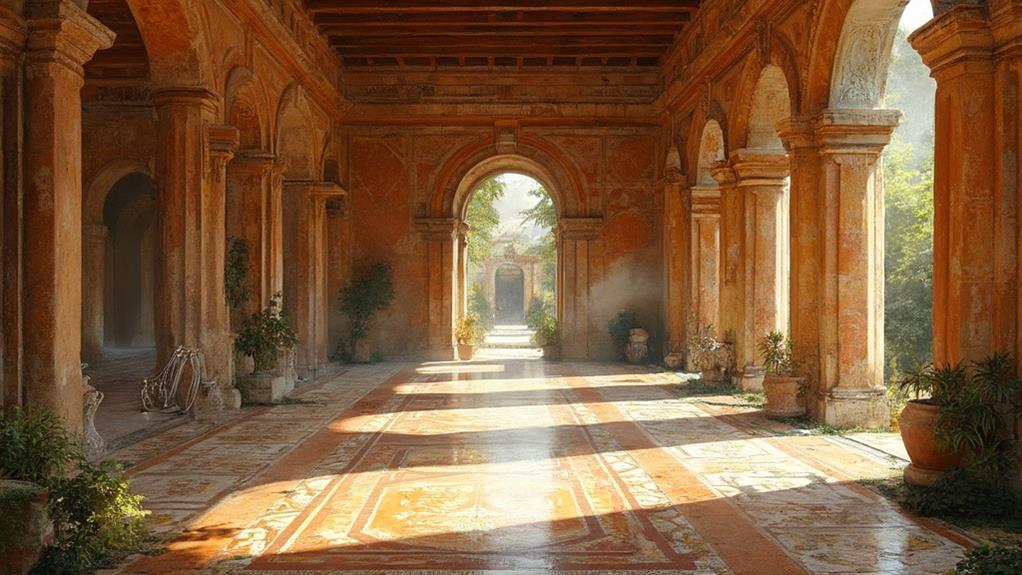
As you explore the ancient Roman use of wulfenite for decorative purposes, consider how its lead molybdate mineral composition, primarily sourced from regions like Mexico and Morocco, contributed to its appeal. The distinctive crystal habits of wulfenite, coupled with its vibrant orange-yellow hues, made it highly desirable for creating intricate mosaics and inlays that adorned opulent villas and public buildings. This mineral's ability to capture and reflect light not only enhanced the aesthetic allure of Roman artwork but also underscored its association with wealth and status among the elite.
Mexican and Moroccan Sources
Renowned for its vibrant hues and unique crystal formations, wulfenite sourced from Mexico and Morocco captivates mineral enthusiasts and collectors alike. Mexican wulfenite, particularly from the Los Lamentos mines, is celebrated for its intense colors and distinctive crystal shapes. This locale has produced some of the most sought-after specimens, with hues ranging from deep orange to bright yellow, often attributed to trace elements like chromium. The mineral's aesthetic value is further enhanced by its rarity, making it a prized addition to any collection.
In Morocco, wulfenite deposits are equally significant, contributing to its popularity among collectors. Moroccan specimens are known for their striking visual appeal, with colors that mirror those of their Mexican counterparts. These deposits are also prized for their rarity and quality, ensuring that Moroccan wulfenite remains a highly desirable mineral in the market. The presence of chromium and other elements plays a vital role in the mineral's coloration, giving it a unique and attractive appearance.
Both Mexican and Moroccan sources are renowned for producing high-quality wulfenite, making them essential locations in the world of mineral collection. Their distinct characteristics and vibrant colors continue to fascinate collectors globally.
Lead Molybdate Mineral Composition
Wulfenite's allure doesn't stop at its vibrant hues and unique crystal formations from Mexican and Moroccan sources. This striking mineral, classified as a lead molybdate with the chemical formula PbMoO4, fascinated the Romans, who appreciated its bright colors and distinct crystal forms. The presence of lead and molybdenum in wulfenite contributed not only to its engaging appearance but also to its rarity and desirability in ancient times. The Romans skillfully incorporated wulfenite into mosaics and artworks, utilizing its bright yellow and orange hues to enhance the visual appeal of decorative objects and architectural elements.
The technical composition of wulfenite, particularly its tabular and prismatic crystal forms, made it a prized material in Roman decorative arts. The interplay of lead and molybdenum within the mineral matrix resulted in a diverse array of colors and textures, making it an ideal choice for artisans seeking to create visually stunning pieces.
- Artistic Value: Wulfenite's vibrant colors were a key component in Roman mosaics, adding visual depth.
- Rarity and Desirability: Lead molybdate's unique properties made it a rare and sought-after material.
- Architectural Influence: Its bright hues influenced Roman design aesthetics, highlighting their innovative use of materials.
Orange-Yellow Hues Observed
Roman artisans were captivated by the vibrant orange-yellow hues of wulfenite, a mineral that became a hallmark of decorative sophistication. These hues, ranging from golden orange to deep yellow, perfectly aligned with Roman artistic themes, reflecting the era's opulence. The warm color palette was not just visually striking but also symbolized wealth and status. Ancient craftsmen skillfully incorporated wulfenite into ornamental objects and jewelry, utilizing its unique coloration to elevate their creations' visual richness.
Wulfenite's appeal was heightened by its rarity and the variations in its hues, often attributed to traces of chromium. This made it a highly sought-after material among affluent Romans, who valued it for both decorative and symbolic purposes. The mineral's orange-yellow hues were more than just an aesthetic feature; they signified a connection to the healing properties attributed to vibrant colors in Roman culture, believed to promote well-being and liveliness.
The historical significance of wulfenite in Roman decorative arts illustrates the mineral's enduring allure. Its use in luxurious decor underscores the craftsmanship and mineralogical appreciation of the time, highlighting its importance in both artistic and cultural contexts.
Distinctive Crystal Habits Identified
Beyond the allure of its vibrant hues, wulfenite's distinctive crystal habits played a pivotal role in its decorative use in ancient Roman art and architecture. These habits, characterized by thin tabular and prismatic formations, allowed wulfenite to serve as an exquisite material in mosaics and inlaid art. Its bright orange and yellow hues made the mineral a standout choice, capturing light and attention in any setting. The crystals' unique structure not only offered a visual appeal but also added a textural dimension to the surfaces they adorned.
In Roman times, wulfenite was more than just an artistic choice; it was an emblem of prestige. Its rarity and beauty symbolized wealth and status, making it a sought-after addition to villas and public buildings. This mineral's application extended beyond aesthetics, reflecting the era's appreciation for mineralogical craftsmanship.
- Symbol of Wealth: Its rarity made wulfenite a status symbol in Roman society.
- Architectural Enhancement: Used in villas and public buildings to elevate aesthetic appeal.
- Textural and Visual Appeal: The crystal structure provided both tactile and visual enrichment to artistic pieces.
Through these applications, wulfenite's distinctive crystal habits cemented its place in the annals of art history.
Valuation Based on Scarcity

When considering wulfenite's valuation, you'll want to focus on its rare color patterns, as these notably elevate its market price due to their scarcity. The cost can vary widely, with faceted gems reaching up to $725 per carat, while raw forms range from $2.50 to $20 per gram, reflecting the mineral's availability and quality. These distinctive characteristics also enhance the appeal of wulfenite in jewelry applications, such as earrings and brooches, where vibrant hues are especially prized.
Rare Color Patterns Increase Value
Wulfenite's allure among collectors is largely driven by its rare color patterns, which greatly increase its value due to scarcity. Exhibiting vibrant shades of golden orange, yellow, and red, high-quality wulfenite is highly coveted. Inclusion-free crystals, rare in occurrence, can command prices as high as $725 per carat, underscoring the premium placed on both clarity and color. The intensity of these rare color patterns, coupled with the crystal's clarity and cut quality, greatly influence its valuation. Bright and distinct colors are more sought after, making these specimens especially valuable.
Localities known for producing high-quality wulfenite, such as Morocco and Arizona, are treasured among connoisseurs. Mines in these regions yield specimens with unique color variations that enhance their market value. The average wholesale price for raw wulfenite ranges from $2.50 to $20 per gram, with exceptional pieces fetching much higher prices. Here's a glimpse of what collectors seek:
| Color | Average Price per Carat |
|---|---|
| Golden Orange | Up to $725 |
| Vibrant Yellow | $500 – $700 |
| Rich Red | $600 – $725 |
| Clear Crystal | $400 – $650 |
| Inclusion-Free | $500 – $725 |
Understanding these factors will guide you in appreciating the value of this exquisite mineral.
Market Value and Cost Estimate
In the world of mineral collecting, the market value of wulfenite is intricately tied to its scarcity, with several factors playing a fundamental role in its valuation. One major determinant is the rarity and quality of the crystal. Raw wulfenite is highly sought after, especially when inclusion-free. Such pristine specimens greatly boost market demand due to their rarity. The average wholesale prices for raw wulfenite range from $2.50 to $20 per gram, reflecting the quality and scarcity of the material.
Faceted wulfenite, on the other hand, can fetch up to $725 per carat, with prices influenced by factors like color, cut, clarity, and carat weight. Mining locations, such as the Red Cloud Mine in Arizona and Los Lamentos in Mexico, further impact market value. These sites are renowned for their limited yield, enhancing the allure and price of wulfenite sourced from these areas. Additionally, unique colors and crystal shapes elevate the aesthetic appeal, contributing to a higher valuation. The mineral's designation as Arizona's state mineral adds historical importance, further influencing its desirability and market value among collectors. Understanding these factors is essential for appraising wulfenite's worth accurately.
Earrings and Brooches Crafted
As you move from the broader market valuation of raw and faceted wulfenite to its use in jewelry, particularly earrings and brooches, the gemstone's scarcity plays an even more pronounced role in its valuation. Wulfenite crystals, known for their vibrant golden orange and yellow hues, become highly prized when crafted into bespoke jewelry pieces. The scarcity of inclusion-free wulfenite markedly enhances the market value, with well-cut specimens fetching prices up to $725 per carat. This valuation hinges on clarity and color quality, making each piece a potential investment for collectors and enthusiasts.
The appeal of wulfenite in earrings and brooches is further amplified by its historical significance as Arizona's state mineral, alongside its limited mining locations, such as the renowned Red Cloud Mine. The limited availability of high-quality crystals from these sources adds a layer of exclusivity and desire to these crafted pieces. Beyond their aesthetic allure, jewelry featuring wulfenite carries the added dimension of the gemstone's energetic properties, which are believed to imbue spiritual significance. Consequently, when evaluating these jewelry pieces, consider both the tangible attributes of the crystals and the intangible benefits they may offer.
Frequently Asked Questions
What Are the Spiritual Benefits of Wulfenite?
Ever wondered how spiritual cleansing and emotional balance can transform your life? By activating key chakras, wulfenite enhances determination and self-discovery, promoting clarity and healing, ultimately guiding you towards a deeper understanding of your spiritual journey.
What Is Another Name for Wulfenite?
Wulfenite, known as yellow lead ore, reflects its origins and composition. Its chemical structure, lead molybdate (PbMoO4), gives it vibrant hues. This name highlights its historical usage and distinct appearance, particularly in its striking yellow form.
What Are the Physical Properties of Wulfenite?
Imagine wulfenite's dazzling dance of fiery hues! Its composition, PbMoO4, results from wulfenite formation in oxidized lead deposits. With a Mohs hardness of 2.5-3 and density of 6.5-7.0, it's beautifully delicate yet surprisingly heavy.
Would Wulfenite Be Useful as a Gemstone?
In Wulfenite jewelry, its softness (Mohs 2.5-3) limits practical use, but its vibrant colors and crystal formations capture attention. While not ideal for daily wear, Wulfenite energy enhances ornamental collections with its unique aesthetic allure.


