
You'll find zircon is a remarkable zirconium silicate mineral, cherished for its wide color range and illustrious history. It's not just decorative; zircon is believed to aid emotional balance, grounding, and resilience. Engaging the solar plexus chakra, it promotes confidence and clarity. Employed in moonlight rituals, it is known to cleanse and recharge energies. Its use in ancient jewelry, from Cleopatra to the British Crown Jewels, highlights its enduring appeal. As a birthstone for December, it offers compatibility with Sagittarius and Capricorn. This intriguing mineral promises much more to explore in its diverse properties and cultural significance.
Key Takeaways
- Zircon is a zirconium silicate mineral known for its diverse color range and historical significance in jewelry.
- It possesses healing properties, promoting emotional balance, stability, and grounding through meditation and chakra alignment.
- Blue zircon fosters harmonious relationships, while pink zircon amplifies love and romance.
- Zircon is December's birthstone, symbolizing purity, peace, and prosperity, particularly resonating with Sagittarius and Capricorn.
- Full moon rituals cleanse zircon's energies, enhancing its healing properties and promoting emotional resilience.
Crystal / Mineral Overview and Meaning
When it comes to zircon, you're looking at a mineral that holds both historical significance and practical applications. Zircon, a zirconium silicate, is celebrated for its diverse color palette—ranging from colorless to vibrant hues of yellow, blue, brown, and red. This chromatic versatility makes it a sought-after gemstone in the jewelry industry. Historically, the Persian name "zargun," meaning gold-colored, underscores its longstanding association with wealth and prosperity.
From an expert standpoint, zircon's age is truly remarkable. At approximately 4 billion years old, it ranks among the oldest minerals on Earth, offering invaluable insights into the planet's geological history. Its brilliance and optical properties have made it an economical alternative to diamonds, especially during the Victorian era, when it was extensively used in jewelry.
Beyond its aesthetic and historical allure, zircon is reputed to harbor healing properties. It's believed to promote balance and grounding, aligning with metaphysical concepts of chakra activation and emotional healing. As a mineral, zircon's applications extend beyond mere ornamentation, potentially serving as a tool for personal growth and spiritual development. Recognizing these facets enriches your understanding of zircon's multifaceted nature.
Boosts Emotional Resilience

Incorporating zircon into your emotional wellness practices leverages its restorative properties and historical significance, such as the hyacinth's mention in ancient texts, to stabilize emotional balance. By engaging the solar plexus chakra, zircon enhances self-confidence, which is essential for emotional resilience. Regular meditation with zircon, especially when purified with moonlight rituals, can facilitate profound emotional healing, equipping you to face life's challenges with increased fortitude.
Hyacinth in Ancient Texts
Throughout ancient texts, hyacinth zircon emerges as a powerful symbol of protection and emotional resilience. Its vibrant orange to red hues are not just visually stunning but historically significant. In Hindu mythology, hyacinth is linked to the Kalpavriksha tree, a symbol of growth and resilience, illustrating its protective qualities. The Bible references hyacinth as part of Aaron's breastplate, providing strength and courage. This connection underscores its historical role in fortifying emotional fortitude.
Ancient cultures revered hyacinth for its purported ability to enhance emotional resilience. It was believed that wearing hyacinth could help you navigate challenging circumstances by warding off negative energies and promoting mental clarity. This gemstone was considered a talisman, offering not just protection but also a pathway to mental stability.
| Ancient Texts | Significance |
|---|---|
| Hindu Mythology | Growth and Resilience |
| Bible | Strength and Courage |
| Ancient Cultures | Emotional Resilience Enhancement |
| Talisman Use | Protection and Mental Clarity |
| Historical Accounts | Ward Off Negative Energies |
Hyacinth's enduring presence in these texts highlights its valued role in supporting emotional balance and protection. As you explore its historical context, you gain a deeper understanding of its significance across cultures and time periods.
Restorative Emotional Balance Properties
Often regarded as a powerful grounding stone, zircon plays a critical role in balancing emotional states and enhancing resilience against stress and anxiety. Its healing properties are closely tied to the activation of the solar plexus and sacral chakras, pivotal centers for emotional stability. By engaging these energy points, zircon aids in fortifying personal strength and maintaining equilibrium in tumultuous emotional landscapes.
Zircon's versatility extends to its coloration, each hue offering distinctive emotional benefits. Blue zircon is renowned for fostering harmonious relationships, while pink zircon amplifies feelings of love and romance, thereby contributing to a balanced emotional state. Regular incorporation of zircon into meditation practices can clear self-doubt, paving the way for emotional healing and fostering new perspectives on personal challenges. This reflective process facilitates a deeper understanding of one's emotional landscape, promoting resilience and growth.
Imagine the scene:
- Blue zircon: Encourages peace and understanding in relationships.
- Pink zircon: Invites warmth and deepens emotional connections.
- Meditation with zircon: Clears mental fog, revealing clarity and confidence.
- Dream manifestation: Aligns intentions with reality, enhancing intuitive insights.
Incorporating zircon into your life can greatly bolster emotional resilience, offering a supportive foundation for personal development and healing.
Applying Zircon in Meditation
Incorporating zircon into meditation practices can markedly enhance emotional resilience by grounding the individual and dispelling self-doubt. This mineral's unique ability to activate all chakras fosters an integrative balance between your physical, emotional, and spiritual selves, which is essential for personal growth. By holding zircon during meditation, you can reinforce self-belief and pursue new life paths with greater clarity. The selection of zircon's vibrant colors can be tailored to meet specific emotional healing needs; for instance, blue zircon can enhance relationship dynamics, while colorless varieties aid in mental purification.
| Color | Emotional Healing Purpose |
|---|---|
| Blue | Enhances relationship dynamics |
| Colorless | Supports mental purification |
| Red | Stimulates energy and passion |
| Green | Promotes growth and healing |
| Yellow | Encourages creativity and focus |
Purifying With Moonlight Ritual
During a full moon, the Purifying with Moonlight Ritual serves as an effective method to cleanse and recharge zircon's energies, amplifying its healing properties. By placing zircon under the purifying moonlight, you enable it to absorb lunar energy, which is universally acknowledged for its capacity to dispel negativity and foster emotional resilience. This ritual is particularly beneficial for releasing negative emotions and inviting positive energy into your life.
To execute this ritual, position your zircon outside or on a windowsill during a full moon. Allow it to bask in the moon's purifying light for several hours. This process not only rejuvenates zircon's intrinsic energies but also enhances its natural ability to balance chakras, promoting inner peace and emotional healing. The moonlight interacts with zircon's structure, optimizing its healing properties and facilitating your emotional growth.
Consistent practice of this moonlight ritual can deepen your connection with zircon. This ongoing relationship amplifies its benefits, especially in meditation and emotional development. By regularly engaging in this practice, you fortify your emotional resilience, enabling you to navigate life's challenges with a balanced and peaceful mindset.
Combining With Amethyst Benefits

The synergy between zircon and amethyst offers a profound enhancement of their individual healing properties, promoting emotional balance and spiritual growth. Zircon's high refractive index complements the calming energy of amethyst, creating not only a visually striking piece of jewelry but also an energetically harmonious blend. This combination is thought to activate all chakras, with zircon providing grounding while amethyst opens higher dimensions of consciousness and intuition.
When you incorporate both stones into your meditation practice, you may find a notable deepening in focus and clarity. Zircon's purifying properties, paired with amethyst's protective and stress-relieving qualities, make this duo particularly effective for detoxification processes. As you meditate, zircon helps root you to the present moment, enabling you to manifest intentions and gain insights into your personal journey. Meanwhile, amethyst relieves stress, allowing intuition to flourish.
In wearing or working with zircon and amethyst together, you're likely to notice an enhanced ability to balance emotions and connect with your inner wisdom. This pairing serves as a powerful tool for both personal growth and spiritual exploration, assisting you in maneuvering life's challenges with clarity and peace.
Astrological Significance of Zircon

When considering zircon's astrological significance, its compatibility with Sagittarius and Capricorn is paramount, as it aligns with their adventurous and ambitious nature. As December's birthstone, zircon symbolizes wisdom and protection, making it an ideal gemstone for enhancing clarity and emotional stability. Additionally, zircon resonates with various elemental associations, with its diverse color spectrum linking to distinct planetary influences, particularly enhancing communication and spiritual growth.
Zodiac Compatibility With Zircon

Associated with the zodiac sign Sagittarius, zircon embodies qualities like exploration, adventure, and optimism—essential traits of this fire sign. As one who aligns with Sagittarius, you'll find zircon to be more than just a beautiful gem; it's a catalyst for enhancing your natural generosity and open-mindedness. The calming properties of zircon, particularly in its blue variant, are believed to help balance your emotional highs and lows. This balance is vital for mitigating the restlessness that Sagittarians often experience. By fostering stability, zircon aids in maintaining your adventurous spirit without overwhelming emotional turbulence.
Zircon's resonance with all chakras makes it an exceptional tool for spiritual growth, enhancing your connection to your astrological path. Its influence extends beyond Sagittarius, offering benefits to anyone seeking to align their astrological energies. For Sagittarians, it's particularly supportive during times of exploration, providing a sense of protection and grounding. As you navigate through life's journeys, zircon's stabilizing energy can be a reliable companion, helping to harmonize the emotional and spiritual aspects of your being. Embrace zircon to amplify your strengths and alleviate your challenges, ensuring a balanced and fulfilling journey.
Zircon's Birthstone Month

Zircon, one of December's three birthstones, symbolizes purity, peace, and prosperity, making it a meaningful choice for those celebrating birthdays in this month. As a December birthstone, zircon represents the unique characteristics and traits of individuals born under the Sagittarius or Capricorn zodiac signs. Its astrological significance is tied to enhancing intuition and creativity, attributes highly valued by those born in December.
Historically, zircon was revered as a talisman for travelers, believed to offer protection and bring luck, particularly to December natives. This aligns with the adventurous spirit of Sagittarius and the determined nature of Capricorn. The birthstone's protective qualities make it an ideal companion for those starting on new journeys or seeking personal growth.
Zircon's diverse color palette, including blue, colorless, and golden hues, provides an opportunity for individuals to select a stone that aligns with their personal energy and astrological significance. These color variations not only cater to aesthetic preferences but also amplify the stone's connection to your zodiac attributes. Choosing zircon as your birthstone is not just a celebration of your birth month, but also an embrace of the stone's powerful symbolism and historical significance.
Zircon's Elemental Association
Moving forward from its significance as a birthstone, zircon holds a deep astrological association, particularly with the sign of Sagittarius. This mineral is highly valued among Sagittarians, dating back to ancient times, as it symbolizes adventure and exploration. Zircon enhances Sagittarius's inherent curiosity and enthusiasm for life, making it a powerful talisman for those born under this sign. In astrology, it provides grounding energy, helping balance the high energy levels typical of Sagittarians, thereby maintaining focus and clarity.
Moreover, zircon's connection to Jupiter, the ruling planet of Sagittarius, amplifies its influence. Jupiter is synonymous with abundance, growth, and good fortune, and zircon resonates with these attributes. By wearing or carrying zircon, Sagittarians can align their energies with their aspirations, aiding in the manifestation of their goals and dreams.
Here's a quick reference table to encapsulate zircon's astrological significance:
| Aspect | Zircon's Influence | Sagittarius |
|---|---|---|
| Symbol | Adventure, Exploration | Optimism and Enthusiasm |
| Traits Enhanced | Curiosity, Enthusiasm | Natural traits of Sagittarius |
| Energy Balance | Grounding, Focus | High Energy |
| Planetary Link | Jupiter | Abundance, Growth, Good Fortune |
| Goal Support | Manifestation of Aspirations | Alignment with Personal Goals |
This powerful association makes zircon not just a gemstone, but a crucial companion for Sagittarians.
Zircon's Ancient Use in Jewelry
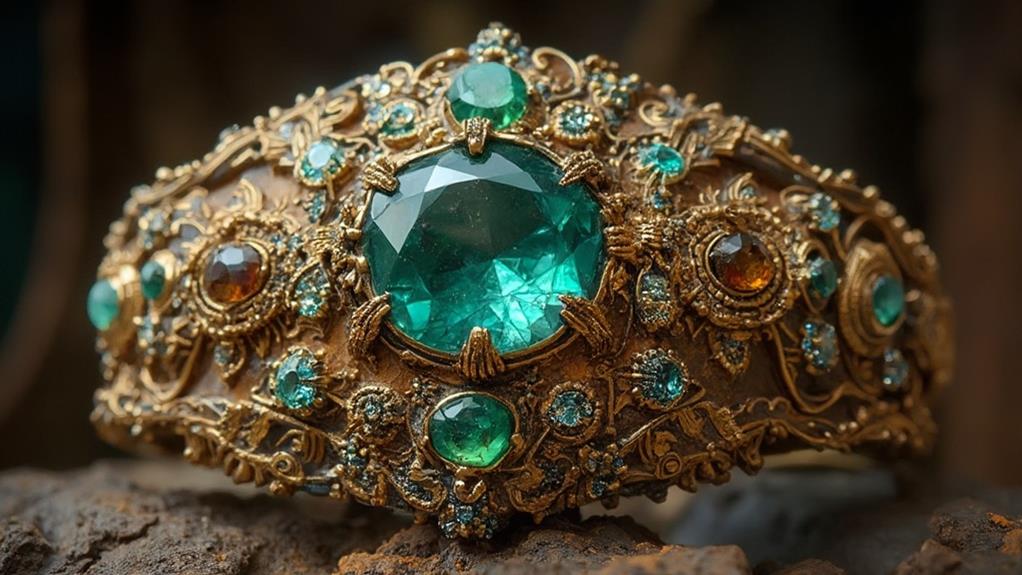
You'd be intrigued to know that zircon's allure has transcended centuries, being a feature in the British Crown Jewels and revered by ancient civilizations like Egypt. Cleopatra herself is believed to have adorned zircon, showcasing its esteemed status in regal and symbolic ornamentation. Analyzing these historical contexts reveals zircon's enduring appeal and its integration into culturally significant artifacts.
Zircon in British Crown Jewels
Often regarded as a gemstone of regal splendor, zircon holds a storied place in the British Crown Jewels, underscoring its historical significance and enduring allure. Zircon is often chosen for its brilliance and diamond-like appearance, making it a favored choice in royal ornamentation. As one of the oldest gemstones, it has been seamlessly incorporated into notable pieces like the Imperial State Crown. This crown, a cornerstone of the British regalia, features zircon among a dazzling array of precious stones.
The table below provides insight into zircon's role:
| Feature | Description |
|---|---|
| Gemstone Brilliance | Zircon's diamond-like sparkle enhances royal jewelry. |
| Historical Significance | Symbolizes wealth, prestige, and ancient craftsmanship. |
| Cultural Importance | Valued in the Crown Jewels for its regal connotations. |
| Economical Alternative | Historically favored as a cost-effective diamond substitute. |
Zircon's use in the Crown Jewels reflects its esteemed status and the meticulous craftsmanship of jewelers who have utilized this ancient gem to convey opulence. Whether enhancing the majesty of the Imperial State Crown or adding depth to other royal adornments, zircon's presence is a representation of its cultural importance throughout history. It stands not just as a symbol of status but as a bridge connecting modern royalty to its storied past.
Zircon in Ancient Egypt
In the opulent world of Ancient Egypt, zircon was more than just a gemstone; it was a symbol of the civilization's rich appreciation for beauty and durability. Zircon is one of the minerals that defined their exquisite craftsmanship, frequently featured in jewelry and ornamentation. This mineral was esteemed not only for its aesthetic appeal but also for its enduring nature, making it a favored material for both everyday adornments and significant burial items.
Egyptians attributed protective qualities to zircon, incorporating it into burial practices to shield the deceased from evil spirits in the afterlife. Its vibrant red and golden hues were particularly sought after, embodying wealth and status among the elite. The choice of zircon in jewelry was both a declaration of affluence and a spiritual safeguard, interlinking the physical and metaphysical worlds.
Archaeological finds have uncovered zircon-adorned artifacts within tombs, underscoring its role in ancient rituals and as a symbol of prosperity. These discoveries highlight the Egyptians' deep-seated belief in the gemstone's power to transcend mere decoration, weaving it into the spiritual tapestry of their culture as a talisman against malevolent forces.
Cleopatra's Zircon Adornments
Building on zircon's revered status in Ancient Egypt, Cleopatra's use of this gemstone further illustrates its prominence in ancient jewelry design. Zircon, called one of the oldest minerals, dates back to at least 300 BC. Its historical use in adornments is a proof of its enduring appeal. The allure of zircon in Cleopatra's time lay in its rich color variations—ranging from deep reds to vibrant yellows and blues—which made it an ideal choice for the intricate and opulent jewelry designs favored by the elite.
Cleopatra, known for her exquisite taste and strategic use of symbolism, likely recognized zircon's potential to convey power and status. By incorporating zircon into her regalia, she not only showcased her wealth but also embraced a gemstone with protective and talismanic properties. Zircon's ability to serve as a substitute for more expensive gems allowed Cleopatra to maintain an image of grandeur without excessive expenditure.
In ancient civilizations, zircon wasn't just a decorative element; it was also believed to offer protection and good fortune, enhancing its desirability. Cleopatra's affinity for zircon underscores its significance in ancient luxury and aesthetics, reflecting a sophisticated understanding of gemstone symbolism.
Zircon's Ancient Geological Formation

When examining zircon's ancient geological formation, you'll find Sri Lanka's deposits particularly significant due to their remarkable purity and age. Zircon's tetragonal crystal structure, rich in zirconium silicate, accounts for its impressive refractive index and colorful light dispersion, often enhanced by faceted and cabochon cuts. The mineral's vibrant hues, ranging from red to blue, are attributed to trace elements and impurities, showcasing its complex chemistry and geological history.
Sri Lanka's Zircon Deposits
Nestled along the coastal regions of Sri Lanka, especially in locations like Ratnapura and Galle, lie some of the world's most significant zircon deposits. These deposits are renowned for their exceptional clarity and brilliant colors, which make them highly coveted in the gem market. Geological research reveals that these zircon formations emerged approximately 4 billion years ago, marking them as among the oldest known on Earth. This ancient geological history contributes to the unique characteristics that distinguish Sri Lankan zircon from other sources globally.
Sri Lankan zircon is not only treasured for its natural beauty but also for its versatility in enhancing its aesthetic appeal. Heat treatments are commonly applied, transforming the zircon into a spectrum of colors, from colorless to deep blue, which further elevates its market value. The diverse color palette, including yellow, brown, and red, often results from mineral impurities integrated during the formation process, reflecting the rich geological history of the region.
For gem enthusiasts and collectors, understanding the origin and formation of Sri Lankan zircon is essential to appreciating its value. This knowledge underscores the significance of these ancient deposits and their enduring allure in the world of gemstones.
Zircon's Chemical Structure Analysis
One might consider zircon's chemical structure as a demonstration to its enduring presence and significance in the geological timeline. This mineral, composed of zirconium silicate (ZrSiO4), is renowned for its tenacity and brilliance, primarily due to its robust tetragonal crystalline structure. This formation not only enhances its optical properties but also underscores its geological resilience. Tracing back to nearly 4 billion years, zircon's ancient formation marks it as one of Earth's oldest minerals, providing a window into the planet's early history.
The structural integrity of zircon is integral to its enduring nature. The inclusion of trace elements such as uranium and thorium contributes to its subtle radioactivity, making it a critical tool in radiometric dating. This ability to act as a geological timekeeper is invaluable for understanding Earth's formative processes. You can visualize zircon's journey through:
- Crystals forming deep within igneous and metamorphic rocks
- Sedimentary deposits revealing their ancient secrets
- Mining operations in regions like Australia and Madagascar
- Tetragonal lattices reflecting light brilliantly
Zircon's chemical structure is not just an indication of its antiquity but also a cornerstone in unraveling the mysteries of Earth's geological past.
Zircon's Colorful Light Dispersion
Zircon's chemical structure not only underscores its ancient origins but also plays a pivotal role in its brilliant optical properties. As a silicate mineral primarily composed of zirconium silicate, zircon boasts a high refractive index, directly contributing to its colorful light dispersion and intense brilliance. This refractive index allows zircon to bend light considerably, splitting it into a spectrum of vibrant colors. Such dispersion is further enhanced by zircon's unique tetragonal crystal structure, which accommodates an array of colors including colorless, yellow, blue, and red, largely influenced by impurities like uranium and thorium during its formation.
What makes zircon stand out even more is its high birefringence, a property that enables it to split light into two distinct rays. This phenomenon amplifies its sparkle, making zircon a popular alternative to diamonds in jewelry. When light enters a zircon crystal, it refracts and disperses, creating a mesmerizing play of colors that captivates the eye. Whether in natural form or polished, zircon's ability to display such intense brilliance and colorful light dispersion is a proof of its complex geological history and the intricate dance of light within its crystalline structure.
Faceted and Cabochon Cuts
In the domain of gemstone cutting, the versatility of zircon is on full display through both faceted and cabochon cuts, each accentuating different aspects of the mineral's inherent beauty. Faceted cuts, with their precise angles, enhance zircon's remarkable brilliance and the interplay of light within the stone. This is due to zircon's high refractive index and birefringence, which create a dazzling, multi-colored display. On the other hand, cabochon cuts emphasize zircon's rich color and luster, bringing out the unique hues that result from impurities incorporated during its ancient geological formation.
Zircon's formation process, which dates back approximately 4 billion years, involves complex heat and pressure changes. These natural processes contribute to the mineral's diverse color and texture, offering a unique canvas for both faceted and cabochon cuts. When you consider zircon for your jewelry design, think about:
- The brilliant sheen of faceted zircon, dancing with light.
- The smooth, polished surface of a cabochon cut, highlighting depth of color.
- Ancient geological history captured in every cut.
- The dynamic play of colors from zircon's internal structure.
Each cut tells its own story, rooted in zircon's ancient past.
Zircon Clarity and Pricing

When evaluating zircon, you'll find that high-quality blue zircon types, such as starlite, are particularly prized for their vivid color and scarcity, commanding premium prices. Understanding the zircon pricing spectrum requires an analysis of factors including clarity, size, and whether the gemstone has undergone heat treatment to enhance its attributes. Historically, zircons set in Victorian-era brooches often highlight the gem's versatility and enduring appeal, as these settings showcase zircons' brilliance and intricate craftsmanship.
High-Quality Blue Zircon Types
Often admired for its enchanting hue, high-quality blue zircon, commonly known as "starlite," stands out in the gemstone market due to its vibrant color and remarkable optical properties. This variety is particularly sought after for its brilliant sparkle, a result of its double refraction and high refractive index. When it comes to clarity, blue zircon's value is greatly influenced by the presence of inclusions. Stones exhibiting minimal inclusions and superior transparency are prized for their visual appeal and can command premium prices.
Heat-treated specimens are prevalent, as heat treatment enhances the blue zircon's color, resulting in stable and vivid hues. This process not only amplifies the gemstone's attractiveness but also contributes to its market value. Due to these treatments and inherent qualities, prices for high-quality blue zircon can fluctuate considerably, ranging from $50 to over $500 per carat. Factors like clarity, carat weight, and the craftsmanship involved in the jewelry design further influence pricing.
For anyone considering an investment in blue zircon, understanding these elements is essential. Selecting a stone with ideal clarity and color, perhaps enhanced through heat treatment, guarantees a valuable and visually stunning addition to any collection.
Zircon Pricing Spectrum Overview
Maneuvering the zircon pricing spectrum can be a complex task due to the numerous factors that influence its market value. A vital determinant in zircon pricing is clarity, which greatly impacts how much a gemstone can fetch. Stones exhibiting high transparency with minimal inclusions are typically more coveted, thereby commanding higher prices. Zircon, particularly the clear or colorless variety known as Matura diamond, often mimics the brilliance of diamonds and is priced accordingly.
Color also plays an essential role. Blue and red zircon are especially prized, with specimens of exceptional quality reaching prices upwards of $100 per carat. However, heat-treated zircons, which undergo color enhancement yet retain clarity, might be priced more competitively, offering an affordable alternative to naturally colored varieties.
Understanding the interplay between these factors is important when evaluating zircon pricing. Here's a simplified breakdown:
| Clarity Level | Color Category | Price Range (per carat) |
|---|---|---|
| High Clarity | Clear/Colorless | $50 – $150 |
| Medium Clarity | Blue/Red | $70 – $100+ |
| Low Clarity | Heat-Treated | $20 – $60 |
On average, zircon prices range from $20 to $150 per carat, contingent on the gem's unique attributes and demand trends.
Victorian-Era Brooch Settings
During the Victorian era, zircon emerged as a favored gemstone for brooch settings, thanks to its impressive brilliance and cost-effectiveness as a diamond substitute. The clarity of zircon in these intricate designs typically ranged from transparent to semi-transparent, enhancing its aesthetic appeal. This clarity, combined with zircon's vibrant colors and notable luster, made heirloom pieces from the 1880s particularly prized among collectors. Zircon's refractive index and double refraction properties further amplified its desirability, as these optical characteristics lent a mesmerizing sparkle to any jewelry piece.
When examining pricing, several factors influenced the market value of Victorian-era zircon brooches. Clear and colorless zircon, often termed "Matura diamond," typically commanded the highest prices due to their diamond-like appearance. However, the price spectrum was broad, reflecting variations in clarity, size, and color. Larger stones or those exhibiting exceptional clarity and vibrant hues were particularly sought after, leading to significant price differentials.
As you explore Victorian-era jewelry, understanding the nuances of zircon's clarity and pricing helps you appreciate why this gemstone was so cherished. Its unique optical properties and historical significance render zircon an enduring symbol of Victorian elegance and sophistication.
Frequently Asked Questions
What Are the Healing Powers of Zircon?
Oh, didn't you know? Zircon's just your average wonder mineral, detoxifying nicotine and alcohol while balancing adrenal glands. Its benefits include promoting restful sleep, easing fevers, soothing pain, and enhancing intuition. Truly, zircon healing is astonishingly all-encompassing.
What Does Zircon Do for the Body?
Zircon's benefits include detoxifying nicotine and alcohol, soothing respiratory issues, and reducing fevers. Its properties promote restful sleep, alleviate pain, and enhance relationships. Different colors target specific needs, like blue for relationships, colorless for mental clarity.
What Does the Zircon Symbolize?
When you explore zircon's symbolism, you're diving into a world of purity and wealth. Its cultural significance spans from being a talisman against misfortune to representing beauty and elegance, deeply rooted in historical and mythological narratives.
What Is the Spiritual Meaning of Zirconia?
Zirconia symbolism lacks the spiritual depth found in gemstones like zircon. During zirconia meditation, its primary role is aesthetic, promoting focus through its diamond-like brilliance rather than facilitating spiritual growth or energy alignment, reflecting its synthetic nature.

