Anhydrite, composed of calcium sulfate, serves as a semi-precious gemstone revered for its healing properties and connection to emotional resilience. Known for its association with the crown and throat chakras, anhydrite promotes spiritual awareness and facilitates authentic communication. It primarily resonates with the zodiac sign Aquarius, enhancing traits of independence and creativity. Ancient cultures valued anhydrite for decorative and ceremonial practices, symbolizing purity and aiding spiritual journeys. Additionally, complementary crystals like selenite enhance its benefits. The multifaceted uses and qualities of anhydrite position it as a significant tool in both spiritual and emotional contexts. Explore further to uncover additional insights.
Key Takeaways
- Anhydrite, composed of calcium sulfate, enhances emotional resilience and supports self-discovery during life's changes.
- It is associated with the crown and throat chakras, promoting spiritual awareness and authentic communication.
- The blue variant, Angelite, aids in emotional healing and clearer dialogue during distress.
- Anhydrite is the birthstone for Aquarius, symbolizing independence and enhancing creativity and intuition.
Crystal Overview and Meaning
Anhydrite, a semi-precious gemstone composed of calcium sulfate (CaSO4), is distinguished by its anhydrous nature and perfect cleavage, making it a valuable material in both decorative and functional applications across various fields. The stone's unique properties, including its ability to take on dyes and its availability in colors such as white, blue-gray, and pink, enhance its aesthetic appeal, particularly in jewelry-making.
Anhydrite is frequently associated with the crown chakra, representing spiritual awareness and purity. This connection is believed to promote emotional healing by fostering a deeper understanding of one's self and encouraging intuitive insights. As a zodiac birthstone for individuals born under the sign of Aquarius, anhydrite embodies independence and uniqueness, qualities that resonate with the Aquarian spirit. The stone's characteristics support self-connection and creativity, enabling individuals to explore their personal potential more fully.
Historically, anhydrite has played a significant role in various cultures, particularly in ancient Egypt, where it was employed for both construction and decorative purposes. This historical usage underscores the gemstone's value beyond its aesthetic qualities, highlighting its practical applications throughout time.
Healing and Emotional Support
Anhydrite serves as a powerful tool for enhancing emotional resilience and supports individuals in maneuvering life's changes. Its connection to the throat chakra facilitates authentic communication, while practices such as meditation and sage smoke cleansing can amplify its benefits. Additionally, understanding its relationship to the Angelite crystal variant enriches the exploration of its healing properties.
Angelite Crystal Variant
Angelite, a striking blue variant of anhydrite, is highly regarded for its ability to foster emotional healing and support, making it an invaluable tool for individuals traversing complex emotional landscapes. This crystal is intrinsically linked to the throat chakra, facilitating authentic self-expression and enhancing communication. By alleviating throat disorders, angelite allows for clearer and more truthful dialogue, which is essential during times of emotional distress.
The calming properties of angelite promote tranquility and assist individuals in managing stress, grief, and anxiety. Its soothing energy provides a safe space for emotional processing, allowing one to confront and release pent-up feelings of anger and worry. As a stone of awareness, angelite also encourages spiritual growth, inviting deeper connections with spirit guides and enhancing one's intuitive capabilities.
In this manner, angelite serves as a powerful ally in emotional healing, supporting individuals in their journey toward clarity and self-discovery. By fostering open communication and promoting peace, angelite not only aids in personal growth but also nurtures the emotional well-being of those who seek its support.
Emotional Resilience Enhancement
Enhancing emotional resilience, anhydrite serves as a transformative tool that facilitates healing and supports individuals in traversing the complexities of life changes and emotional turmoil. This mineral is particularly effective in combating stress and anxiety, helping users cultivate a sense of calmness and acceptance during challenging times. Its healing properties are believed to aid in the release of past trauma, fostering emotional freedom and encouraging new beginnings.
The benefits of anhydrite can be summarized as follows:
- Emotional Healing: It promotes emotional healing, allowing individuals to process their feelings without becoming overwhelmed.
- Throat Chakra Activation: By stimulating the throat chakra, anhydrite enhances authentic self-expression, empowering individuals to communicate their emotions effectively.
- Empathy Development: This stone fosters greater empathy, improving understanding and emotional connections with others, which is crucial for nurturing relationships.
- Resilience Building: Anhydrite supports emotional resilience, equipping users with the tools necessary to navigate life's challenges with stability and grace.
Incorporating anhydrite into one's life can notably bolster emotional well-being, making it an invaluable resource for those seeking healing and support.
Applying Anhydrite in Meditation
Utilizing anhydrite in meditation practices can greatly enhance emotional support and healing, as its unique properties facilitate deeper awareness and connection to both the self and spiritual spheres. This crystal, known as the Stone of Awareness, is particularly effective in activating the Throat Chakra. This activation promotes authentic self-expression, enabling individuals to vocalize their thoughts and emotions more freely during meditation.
Incorporating anhydrite into meditation routines can purify negative energies, supporting the emotional healing process and assisting in the release of past trauma blockages. This purification aids practitioners in achieving inner peace, essential for productive meditation sessions. Moreover, the crystal's grounding properties help balance emotions and alleviate anxiety, fostering stability as individuals navigate their emotional landscapes.
Additionally, meditating with anhydrite strengthens connections to spiritual dimensions, enhancing intuitive abilities and allowing for deeper insights during reflective practices. By establishing a safe and supportive environment, practitioners can fully immerse themselves in meditation, utilizing anhydrite to facilitate a transformative experience. Consequently, integrating anhydrite into meditation not only promotes healing but also enhances the spiritual journey, making it a powerful tool for those seeking greater emotional well-being.
Using Sage Smoke Cleansing
Employing sage smoke cleansing, a traditional practice rooted in spiritual rituals, serves to purify the environment and enhance the emotional support provided by anhydrite during healing sessions. This technique, also known as smudging, involves waving anhydrite through the smoke of burning sage for 30-60 seconds, effectively clearing negative energies that may impede emotional well-being.
The act of sage smoke cleansing not only purifies the space but also promotes emotional balance, making it especially advantageous during periods of stress or grief. The combination of sage and anhydrite enhances the crystal's metaphysical benefits, facilitating deeper meditation and fostering a stronger spiritual connection.
To maximize the effectiveness of this practice, it is advisable to combine sage smoke cleansing with positive affirmations, allowing users to set clear intentions for emotional support and clarity. Regular cleansing maintains the energetic integrity of anhydrite, permitting it to continuously deliver its healing properties. By incorporating sage smoke cleansing into your routine, you can create a harmonious environment conducive to emotional healing and spiritual growth, while maintaining a safe and supportive atmosphere for all involved.
Complementary Crystals for Anhydrite
Anhydrite's unique properties can be greatly enhanced through strategic combinations with complementary crystals, each contributing distinct metaphysical benefits that support spiritual growth, emotional balance, and mental clarity. When paired thoughtfully, these crystals can create a synergistic effect, amplifying the healing energies of Anhydrite.
| Complementary Crystal | Metaphysical Properties | Benefits |
|---|---|---|
| Selenite | Enhances communication and intuition | Facilitates deeper spiritual connections |
| Dolomite | Promotes intellectual clarity | Supports emotional balance and decision-making |
| Apophyllite | Enhances spiritual awareness | Amplifies connection to higher dimensions |
| Clear Quartz | Amplifies healing energies | Provides cleansing and charging experiences |
| Black Tourmaline | Offers grounding and protection | Shields against negative energies and stabilizes emotions |
The combination of Anhydrite with Selenite is particularly effective for those seeking improved communication and intuition, fostering a deeper connection to the spiritual dimension. Dolomite complements Anhydrite by facilitating emotional balance and clarity of thought, making it an excellent choice for critical decision-making.
Apophyllite enhances spiritual awareness, allowing individuals to connect with higher dimensions while amplifying Anhydrite's inherent metaphysical properties. Clear Quartz serves to amplify Anhydrite's healing energies, creating an enhanced cleansing experience. For grounding and protection against negative influences, Black Tourmaline is an ideal companion, promoting emotional stability and safety. These complementary crystals collectively deepen the impact of Anhydrite, enriching the user's spiritual journey.
Zodiac Sign Associations
Anhydrite is primarily associated with the zodiac sign Aquarius, which embodies independence and innovation. This crystal not only aligns with Aquarian traits but also corresponds with specific zodiac birthstones and the Earth element, enhancing the understanding of its energetic influence. Examining these associations provides insight into how Anhydrite can support the emotional and creative development of individuals born under this sign.
Zodiac Signs Linked to Anhydrite
Frequently associated with the zodiac sign Aquarius, anhydrite embodies the traits of independence, creativity, and uniqueness, making it a significant stone for those born under this sign. As a powerful tool for emotional healing, anhydrite gemstones are believed to enhance emotional openness, allowing Aquarians to express their true selves more freely. The properties of anhydrite support individuals in fostering empathy and understanding, which are essential qualities for those aligned with the sign of Aquarius.
Moreover, anhydrite encourages spiritual awareness and intuitive insights, aligning seamlessly with the forward-thinking and innovative nature of Aquarians. This crystal facilitates a deeper self-connection, enabling individuals to explore their innermost thoughts and feelings. By promoting emotional healing, anhydrite assists those with an Aquarius sun sign in maneuvering their complex emotional landscapes, ultimately aiding in personal growth and self-discovery.
The incorporation of anhydrite into one's life can enhance the innate qualities of those under the sign of Aquarius, making it a valuable asset for achieving emotional balance and spiritual fulfillment. Consequently, anhydrite serves not only as a beautiful gemstone but also as a profound ally in the journey of self-exploration and healing.
Associated Zodiac Birthstones
The association of zodiac birthstones with their respective signs highlights the unique qualities and benefits each stone offers, with anhydrite standing out as the designated birthstone for Aquarius. This mineral embodies the essence of independence and uniqueness, making it particularly advantageous for those born under this sign. Anhydrite is believed to enhance emotional openness, allowing Aquarians to forge deeper self-connections and express their feelings authentically.
Additionally, the metaphysical properties of anhydrite support increased intuition and creativity, aligning seamlessly with the innovative spirit characteristic of Aquarians. This stone promotes spiritual awareness, resonating with the Aquarian quest for personal growth and exploration. As individuals born under this sign often seek to expand their horizons, anhydrite serves as a powerful ally in their journey.
Moreover, anhydrite functions as a talisman for good luck, particularly in business endeavors and romantic relationships. By empowering Aquarians to pursue their goals and strengthen their bonds, anhydrite reinforces their innate qualities, facilitating a harmonious balance between personal ambition and emotional connections. Consequently, the significance of anhydrite as the zodiac birthstone for Aquarius encompasses both emotional and spiritual dimensions, providing multifaceted benefits.
Associated Earth Element
Connected to the air element, anhydrite's association with the zodiac sign Aquarius underscores its role in enhancing the intellectual and innovative characteristics inherent to those born under this sign. As the birthstone for Aquarius, anhydrite crystals symbolize creativity and emotional openness, fostering a deeper self-connection. This connection is paramount for Aquarians, who often thrive on expressing their individuality and unique perspectives.
The healing properties of anhydrite are particularly beneficial in promoting spiritual awareness among those influenced by this zodiac sign. By aiding in empathetic understanding, anhydrite helps Aquarians support others emotionally, reinforcing their innate tendency towards humanitarianism. The crystal's alignment with the air element enhances communication, allowing for clearer expression of thoughts and feelings, which can lead to significant personal growth.
Furthermore, the attributes of anhydrite enable individuals to explore their inner selves and the universe more profoundly. This exploration not only supports emotional openness but also encourages a holistic approach to well-being. To conclude, anhydrite serves as a powerful tool for individuals under the zodiac sign Aquarius, enhancing their emotional intelligence and fostering an enriched spiritual journey.
Crystal Facts and History
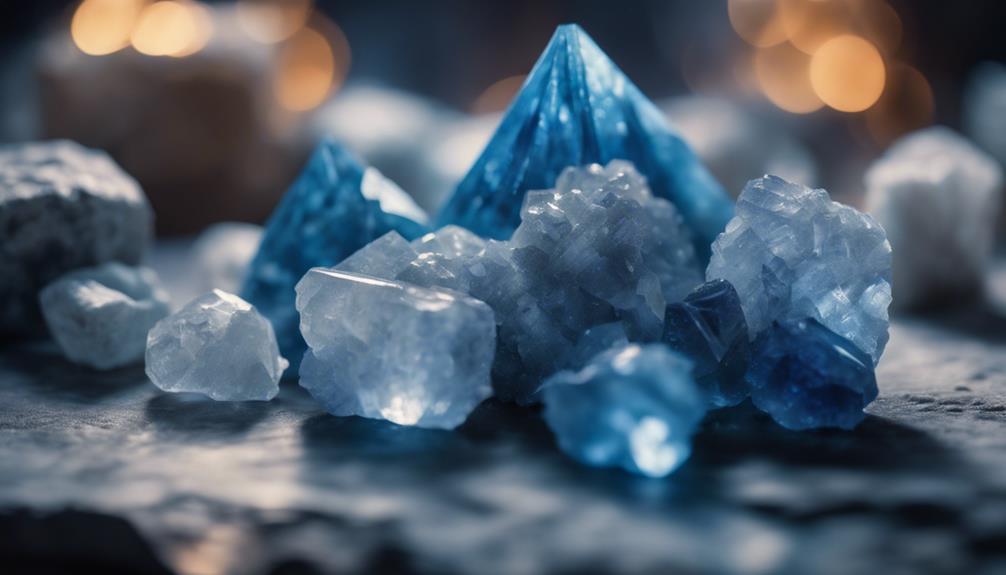
Anhydrite has played a significant role throughout history, particularly in ancient Egyptian burial practices where it was employed as an essential component in construction and decorative applications. Remarkable artifacts containing anhydrite reveal its importance in cultural and ceremonial contexts, showcasing its aesthetic and practical uses. Additionally, contemporary figures in various fields have embraced anhydrite for its purported metaphysical properties, further solidifying its relevance across time.
Notable Historical Artifacts Containing Anhydrite
Numerous notable historical artifacts containing anhydrite have been discovered, particularly within ancient Egyptian tombs, where its application in decorative items and jewelry underscores both its aesthetic appeal and functional properties in construction and art. The ancient Egyptians utilized the anhydrite mineral extensively, incorporating it not only for ornamental purposes but also in plastering techniques that offered protection against moisture, thereby enhancing the longevity of their structures.
Artifacts such as intricately designed jewelry and ornamental pieces reveal the dual significance of anhydrite as both a semi-precious gemstone and a material of practical use. Additionally, during the Roman Empire, anhydrite continued to serve the construction industry, prominently featured in the production of plasters and cements. The historical context of anhydrite highlights its esteemed value across various civilizations, where its beauty was often believed to possess spiritual or protective qualities.
These artifacts not only reflect the artistic capabilities of ancient peoples but also demonstrate a profound understanding of materials that offered both aesthetic and functional benefits. The enduring legacy of anhydrite in historical artifacts attests to its unique properties and versatile applications spanning millennia.
Ancient Egyptian Burial Practices
The utilization of anhydrite in ancient Egyptian artifacts reflects a broader context of burial practices, where the mineral played a significant role in the construction and decoration of tombs, serving both protective and symbolic functions. Ancient Egyptians recognized the mineral's protective qualities, often using anhydrite as a key ingredient in plaster to coat tomb walls. This application helped guard against moisture and decay, guaranteeing the preservation of the deceased's final resting place.
Moreover, anhydrite was imbued with spiritual significance, symbolizing purity and facilitating the spiritual journey of the departed. Its presence in burial sites was believed to enhance the passage to the afterlife, aligning with the ancient Egyptians' profound understanding of metaphysical properties.
In addition to its practical applications, anhydrite was frequently dyed and fashioned into ornamental items that adorned tombs, reflecting the civilization's appreciation for aesthetics and symbolism in their burial rituals. This multifaceted use of anhydrite underscores the ancient Egyptians' commitment to creating a safe and meaningful environment for the deceased, ultimately aiming to guarantee a successful passage into eternity.
Celebrities Known for Anhydrite Use
Celebrities across various fields have increasingly embraced anhydrite for its reputed calming properties and emotional healing benefits, integrating the crystal into their personal and professional lives. Significantly, Adele has turned to anhydrite to enhance her creativity and facilitate emotional healing, reflecting the stone's ability to promote emotional balance.
The late David Bowie was recognized for his unique style and spiritual awareness; he often wore an anhydrite pendant, which symbolized his connection to self-expression. Similarly, actress Gwyneth Paltrow, a well-known wellness advocate, has incorporated anhydrite into her holistic health practices, emphasizing its significance for stress relief and emotional stability.
Musician Sting is another prominent figure who advocates for crystal healing, using anhydrite in his meditative routines to access grounding qualities that foster deeper spiritual awareness. Additionally, Margot Robbie has been seen wearing anhydrite jewelry, highlighting its aesthetic appeal and connection to creativity and intuition, which aligns seamlessly with her artistic persona.
The growing interest among celebrities in anhydrite reflects a broader recognition of its potential benefits for emotional well-being and spiritual growth, encouraging a safe exploration of its properties for those seeking balance in their lives.
Ancient Cultures and Anhydrite Use
Ancient cultures recognized the significance of anhydrite not only for its aesthetic appeal but also for its unique mineral composition, which differs from similar minerals like gypsum. The diverse color variations and patterns found in anhydrite have been documented in archaeological findings, showcasing its artistic applications in ornamental carvings and structures. Additionally, understanding its global sources and geological formations provides insight into the mineral's historical and cultural relevance across civilizations.
Global Anhydrite Sources
Utilized since antiquity, anhydrite has served both practical and decorative purposes across various cultures, with notable historical applications in construction and jewelry-making. This calcium sulfate mineral is primarily found in sedimentary rocks, formed from ancient evaporite deposits where saline water once existed. Its global sources include significant deposits in Austria, Peru, and the United States, where geological conditions facilitated the mineral's formation.
In ancient Egypt, anhydrite was prized for its utility in building materials and decorative plaster, valued for its moisture-resistant properties. Beyond its practical applications, the mineral's aesthetic qualities were recognized in jewelry-making, where it was often dyed to enhance its ornamental appeal. Additionally, the Kamilaroi tribe of Australia attributed spiritual significance to anhydrite, recognizing its potential to promote harmony and balance, thereby highlighting its healing properties.
The historical significance of anhydrite across various cultures illustrates its multifaceted role in human society. As an enduring mineral, it continues to be appreciated not only for its physical attributes but also for the wellness benefits it is believed to offer. Understanding its global sources is essential for harnessing its full potential in both historical and contemporary contexts.
Mineral Composition Analysis
The mineral composition of anhydrite, primarily consisting of calcium sulfate (CaSO4), has been integral to its diverse applications in ancient cultures, particularly in construction and decorative arts, where its physical properties were exploited for both functionality and aesthetic enhancement. This mineral's unique features contributed to several prominent uses in antiquity:
- Construction Material: Anhydrite's durability made it a favored choice for plastering by the ancient Egyptians, protecting structures from moisture ingress.
- Jewelry Crafting: The ability to dye anhydrite allowed artisans to create visually appealing jewelry, showcasing its significance in cultural craftsmanship.
- Spiritual Practices: Ancient civilizations valued anhydrite for its perceived cleansing and purifying properties, integrating it into healing rituals.
- Aesthetic Applications: The mineral's versatility in decorative arts highlighted its role not only as a functional material but also as a medium for artistic expression.
The distinct anhydrous nature of anhydrite, contrasting with gypsum, further emphasizes its unique properties. These historical applications reflect the mineral's enduring significance, underscoring its contributions to both practical and spiritual domains in ancient cultures.
Color Variations and Patterns
Color variations and intricate patterns in anhydrite have played an essential role in its application across various cultures, particularly in the domains of decorative arts and spiritual practices, where each hue and design was imbued with specific meanings and uses. The striking blue form of anhydrite, known as Angelite, has been particularly significant, symbolizing tranquility and communication.
Ancient civilizations, such as the Egyptians, recognized the material's aesthetic versatility, using it ornamentally in jewelry and construction, while also valuing its cleansing properties. Anhydrite's color variations, ranging from colorless to bluish-gray and pink, were associated with various aspects of spiritual healing and emotional balance.
These hues were believed to enhance meditative states, promoting purity and a profound connection with higher dimensions. The intricate patterns often found in anhydrite added to its allure, making it a favored material in rituals aimed at purification and spiritual awareness. Understanding these color variations and their implications can provide insight into the healing properties of anhydrite, guiding individuals in their pursuit of emotional stability and spiritual enrichment.
Color Patterns and Formations
Ancient cultures frequently recognized the intricate formations and distinct color patterns of anhydrite as significant indicators of both its aesthetic value and metaphysical properties, reflecting a deep understanding of the mineral's potential in cultural practices and spiritual rituals. The unique characteristics of anhydrite were utilized in various ways, emphasizing its importance across civilizations.
- Construction and Art: The Ancient Egyptians employed anhydrite for moisture-resistant plastering and ornamental designs, showcasing its durability and visual appeal.
- Jewelry and Talismans: Color variations, particularly the blue hues (angelite), were crafted into jewelry, symbolizing emotional healing and serving as conduits for spiritual communication.
- Geological Significance: Anhydrite's formation from saline evaporation indicated historical geological conditions, influencing local cultural narratives and practices.
- Spiritual Practices: Indigenous tribes, such as the Kamilaroi of Australia, acknowledged crystals like anhydrite for their healing properties, using them to promote harmony and balance within their communities.
These applications highlight the multifaceted role of anhydrite in ancient cultures, intertwining physical attributes with deep metaphysical and healing properties.
Anhydrite Pricing and Rarity
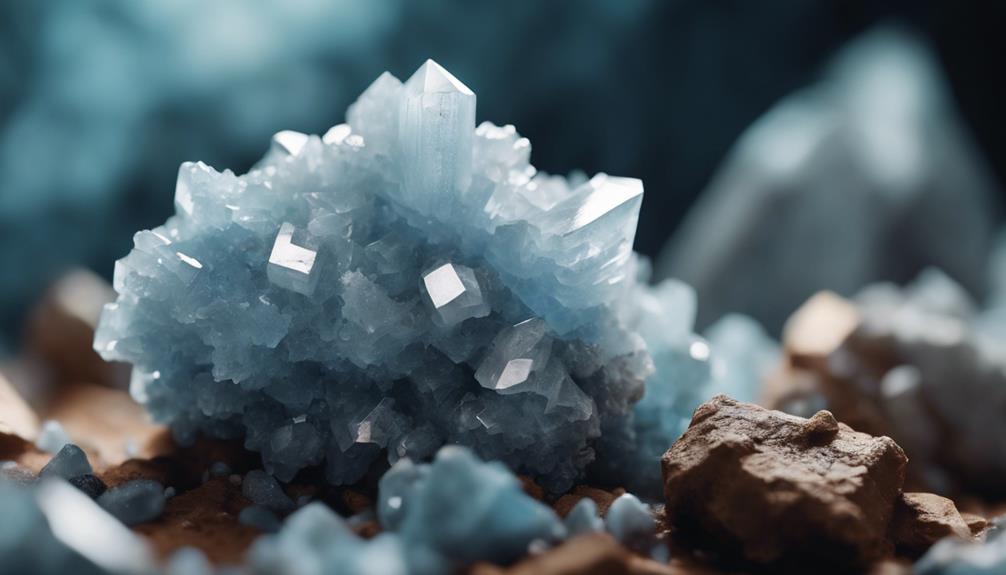
Anhydrite pricing is influenced by factors such as premium quality, unique forms, and market demand, particularly for rare colors like pink, violet, and blue. The availability of these colors, alongside their craftsmanship, greatly impacts their value, with statement rings and other jewelry pieces commanding higher prices. Additionally, the presence of inclusions can further affect both the aesthetic appeal and market pricing of this uncommon mineral.
Premium Quality and Unique Forms
The pricing and rarity of anhydrite are markedly influenced by its unique characteristics, with premium quality specimens commanding higher market values due to their exceptional colors, intricate cuts, and overall clarity. This uncommon mineral is particularly valued for its striking hues, such as pink, violet, and blue, which are considered the most desirable among collectors. The price for cabochon-cut anhydrite typically hovers around $0.10 per carat; however, intricately carved pieces can fetch between $5 to $40 depending on their craftsmanship and size.
Raw angelite, a notable blue variety of anhydrite, is available for $0.02 to $0.10 per carat, while beaded angelite bracelets range from $5 to $60, reflecting variances in quality and design. Given that anhydrite is rarer than gypsum, its unique properties contribute to its appeal among crystal enthusiasts, who appreciate its potential healing properties. Consequently, premium quality anhydrite gemstones are seen as both collectible items and tools for personal growth, which further elevates their market demand and value within the crystal community.
Market Demand and Availability
Market demand for anhydrite, driven by its distinctive colors and healing properties, has led to increased availability of both raw and polished forms in the gemstone market. Anhydrite is classified as an uncommon mineral, with pricing reflecting its rarity. Wholesale rates for cabochons begin at approximately $0.10 per carat, while intricately carved pieces can range from $5 to $40, depending on size and craftsmanship. The most sought-after colors, including pink, violet, and blue shades, greatly influence price points, particularly for raw angelite, which can vary from $0.02 to $0.10 per carat.
In the retail environment, beaded angelite bracelets typically command prices between $5 and $60, while pendants and necklaces may range from $5 to $150, contingent upon design intricacy and quality. Due to its softness, anhydrite is seldom fashioned into faceted stones; instead, it is primarily crafted into cabochons or carvings for jewelry.
The growing market demand for this unique crystal is evident among crystal collectors and spiritual practitioners, who value its distinctive aesthetic and purported healing properties, making anhydrite a notable gemstone in both personal and commercial spheres.
Fashioned Into Statement Rings
Crafting statement rings from anhydrite presents a unique opportunity to showcase this rare gemstone's vibrant colors and distinctive aesthetic, while also steering its pricing dynamics and inherent softness. Anhydrite is priced variably, with wholesale rates for cabochons starting around $0.10 per carat, while intricately carved pieces can range from $5 to $40 depending on size and artisanship. The most sought-after hues, particularly pink, violet, and blue, considerably enhance the valuation of statement rings, making them desirable among collectors and enthusiasts.
However, the softness of anhydrite, with a Mohs hardness of 3 to 3.5, necessitates careful design to prevent damage. Protective settings are often employed to guarantee durability without compromising aesthetic appeal. Furthermore, maintaining the structural integrity of anhydrite jewelry requires regular care; owners should keep their rings dry and shielded from harsh chemicals.
As a gemstone known for its healing properties, anhydrite not only serves as an eye-catching accessory but also as a conduit for positive energy and emotional balance. Consequently, investing in anhydrite statement rings not only provides beauty but also aligns with the holistic practices valued by many.
Frequently Asked Questions
What Are the Healing Properties of Anhydrite?
Anhydrite offers numerous healing properties, primarily through its ability to purify energy fields and transform negative vibrations into positive ones. It enhances emotional stability and facilitates stress relief, making Anhydrite meditation a valuable practice for achieving calmness. By activating the throat chakra, Anhydrite supports self-expression and aids in healing throat-related disorders. Additionally, its energy promotes spiritual awareness, allowing for deeper connections with higher dimensions and fostering personal growth through the release of past traumas.
What Are the Properties of Anhydrite?
Anhydrite, a calcium sulfate mineral, forms in evaporite deposits and sedimentary rocks, distinguishing itself from gypsum by its lack of water. It exhibits a range of anhydrite colors, including colorless, white, blue-gray, and pink. Commonly found in locations with historical saline water evaporation, anhydrite is utilized in construction and agriculture. Its unique properties, including a hardness of 2-3 on the Mohs scale and perfect cleavage, contribute to its practical applications across various industries.
What Does Anhydrite Do?
Anhydrite, characterized by its distinct colors ranging from white to blue-gray, serves multiple purposes. This mineral is often found in sedimentary formations within locations such as evaporite deposits. Anhydrite symbolizes transformation and emotional healing, deeply rooted in various myths that attribute it with protective qualities. It is believed to facilitate communication and spiritual awareness, enhancing intuitive abilities while providing a calming influence in stressful situations, thereby promoting emotional stability and personal growth.
How to Use Anhydrite?
To effectively utilize anhydrite, incorporate it into your meditation techniques by holding the crystal to enhance spiritual awareness. Wearing anhydrite jewelry benefits energy flow and grounding, particularly when worn on the left side. For home decor, place anhydrite strategically to promote balanced energy. Verify energy cleansing by exposing the stone to sunlight or moon water. Additionally, use anhydrite to support chakra alignment, reinforcing emotional healing and personal growth through focused affirmations.