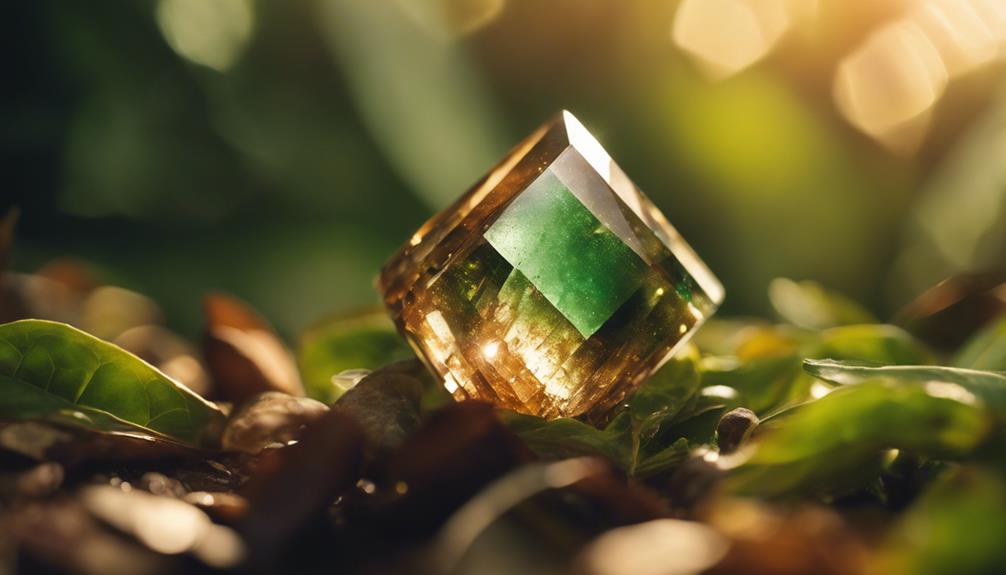
Andalusite is a natural aluminum silicate mineral, known for its pleochroism, displaying a range of colors from different angles. It is closely associated with the solar plexus chakra, promoting self-realization and emotional balance. Healing properties include alleviating anxiety, stress, and pain relief in joint inflammation while fostering spiritual growth and intuitive insights. This crystal primarily benefits individuals born under the sign of Virgo, enhancing analytical thinking and communication skills, while also supporting Air signs. Its protective qualities are amplified in the chiastolite variant. Exploring its origins and cultural significance will reveal further insights into this remarkable mineral.
Key Takeaways
- Andalusite, a natural aluminum silicate, is linked to the solar plexus chakra, promoting self-realization and emotional balance.
- It aids in emotional healing, managing stress, anxiety, and grief, while supporting physical pain relief and cell regeneration.
- Associated with the astrological sign Virgo, andalusite enhances analytical thinking and attention to detail, benefiting Earth and Air signs.
- Pleochroic color variations—green, brown, and reddish—reflect different angles, adding aesthetic and metaphysical value to the crystal.
Crystal Overview and Meaning
Andalusite, a natural aluminum silicate mineral (Al2SiO5), is renowned for its distinct pleochroism, exhibiting a spectrum of colors—primarily green, brown, and reddish—when observed from varying angles, which contributes to its unique appeal in both ornamental and metaphysical applications. This mineral, native to the Andalusia region of Spain, has been historically valued not only for its aesthetic qualities but also for its purported healing properties.
In the domain of metaphysics, andalusite is particularly associated with the solar plexus chakra. This energy center is essential for self-realization and emotional balance, serving as a conduit for personal power and confidence. The metaphysical properties of andalusite are believed to assist in overcoming emotional blockages, fostering a sense of clarity and purpose. By facilitating the release of these blockages, andalusite can promote a more harmonious emotional state, enabling individuals to navigate life's challenges with resilience.
Additionally, andalusite is often linked to the astrological sign Virgo, which embodies analytical thinking and meticulous attention to detail. This correlation suggests that individuals born under this sign may benefit from the grounding energies of andalusite, enhancing their innate capabilities while providing protection against negative influences. As a result, andalusite stands out not only as a gem of beauty but also as a potent ally in the pursuit of emotional well-being and spiritual growth.
Healing Qualities and Uses
Andalusite, particularly in its chiastolite variant, exhibits a range of therapeutic benefits that extend to emotional and physical healing. Its associations with the solar plexus chakra and grounding properties facilitate clarity and stability, making it a valuable tool for meditation practices. Additionally, techniques such as moonlight charging enhance its efficacy, enabling practitioners to harness its protective qualities against negative energies.
Chiastolite Variant of Andalusite
Chiastolite, a unique variant of andalusite, is distinguished by its striking cross-shaped patterns formed by graphite inclusions, which not only enhance its aesthetic appeal but also contribute to its notable metaphysical properties. Renowned for its protective qualities, chiastolite acts as a shield against negative energies, fostering a sense of security and emotional stability. This variant is particularly effective in promoting grounding, allowing individuals to establish a profound connection with their higher selves.
As a tool for emotional healing, chiastolite facilitates the release of stress and anxiety, aiding in the management of grief and emotional turbulence. Its grounding properties enhance clarity, making it an excellent companion during meditation or introspective practices. Additionally, chiastolite is associated with the astrological sign of Virgo, resonating with energies that promote self-awareness and personal growth. This connection to Virgo underscores its potential in enhancing analytical abilities and practical decision-making.
Incorporating chiastolite into daily routines—such as wearing it as jewelry or placing it in personal spaces—can help maintain its protective energies, fostering a balanced emotional state while encouraging clarity and introspection.
Therapeutic Benefits of Andalusite
Employed in holistic healing practices, andalusite is recognized for its multifaceted therapeutic benefits, particularly in promoting emotional balance, enhancing intuitive capabilities, and facilitating physical healing processes. This mineral is a powerful ally for those seeking to improve their mental and spiritual well-being.
- Emotional Balance: Andalusite aids individuals in identifying and addressing emotional blockages, fostering self-realization and resilience against stressors.
- Physical Healing: Known for its physical healing properties, andalusite provides pain relief for joint inflammation and supports cell regeneration, making it beneficial for healing broken bones.
- Spiritual Growth: This stone enhances intuitive insights and supports connections with the higher self, promoting personal development and spiritual growth.
Furthermore, andalusite serves as a protective stone, effectively shielding individuals from negative energy. Its calming influence alleviates anxiety, thereby creating a conducive environment for healing and self-exploration. Those utilizing andalusite in their practices can expect a holistic enhancement of their overall well-being, making it a valuable asset in both physical and emotional therapeutic contexts. To summarize, andalusite's diverse healing properties make it an essential tool for practitioners and individuals alike.
Meditation With Andalusite
Meditation with andalusite serves as a powerful practice that enhances emotional balance and promotes self-realization, making it particularly beneficial for individuals seeking clarity in their life purpose. The stone's grounding properties facilitate a deep connection to Earth's energies, fostering stability and focus during meditation sessions. This connection is essential for cultivating a safe and supportive environment for introspection and growth.
Incorporating andalusite into meditation practices encourages the release of negative emotions, thereby facilitating profound emotional healing. This is especially valuable for individuals processing trauma or grief, as it aids in maneuvering through these complex emotional landscapes. Placing andalusite on the solar plexus chakra during meditation is recommended, as it is believed to clear energy blockages, enhancing personal power and confidence.
Moreover, andalusite enhances intuition and adaptability, equipping practitioners with the tools necessary to steer through life changes more gracefully. This multifaceted approach to meditation not only promotes emotional stability but also empowers individuals to pursue their life purpose with clarity and confidence. A mindful integration of andalusite into one's meditative practices can yield transformative benefits, fostering overall well-being and self-discovery.
Moonlight Charging Technique
Moonlight charging is a refined technique that harnesses the lunar energies to cleanse and amplify the inherent healing properties of andalusite, thereby enhancing its effectiveness in various spiritual and emotional practices. This method aligns the crystal with lunar energies, which are known to enhance its metaphysical qualities such as grounding, protection, and emotional balance.
To perform moonlight charging, place the andalusite outside or on a windowsill where it can absorb the moon's light for several hours, ideally overnight. This gentle process is believed to clear any accumulated negative energies from the stone, restoring its vibrational frequency and supporting its role in healing practices. Regular moonlight charging is recommended to maintain andalusite's energetic clarity, promoting ongoing emotional and spiritual work.
| Step | Description | Duration |
|---|---|---|
| 1. Preparation | Cleanse the andalusite under running water. | 5 minutes |
| 2. Placement | Position under moonlight, ideally full moon. | Overnight |
| 3. Absorption | Allow stone to absorb lunar energies. | 6-8 hours |
| 4. Retrieval | Retrieve the stone with intention. | 2 minutes |
| 5. Recharging | Repeat monthly to maintain properties. | As needed |
Complementary Crystals for Andalusite
Integrating complementary crystals with andalusite can greatly enhance its inherent properties, fostering a more profound emotional stability and spiritual growth through synergistic interactions. The combination of andalusite crystals with specific complementary stones can create a powerful environment conducive to healing and self-discovery.
Citrine, known for its energizing properties, complements andalusite by promoting emotional balance and creativity. This dynamic pairing supports personal growth, enhancing the grounding effects of andalusite while encouraging motivation. Similarly, black tourmaline serves as a robust protection stone, shielding against negative energies. Its presence can amplify andalusite's capacity to foster emotional stability, allowing for deeper self-realization.
Amethyst is another complementary crystal that, when paired with andalusite, aids in spiritual development and intuition. Both stones facilitate emotional healing, making it easier to connect with one's higher self and navigate personal challenges. Moonstone, with its calming energy, harmonizes with andalusite's grounding properties, particularly beneficial during shifting phases, as it enhances emotional balance and intuition.
Lastly, selenite, a powerful cleansing stone, amplifies the healing properties of both andalusite and itself. This pairing can effectively clear energy blockages, thereby enhancing spiritual growth. By carefully selecting these complementary crystals, individuals can create a holistic framework that not only supports emotional and spiritual well-being but also guarantees a safe and nurturing environment for personal transformation.
Zodiac Sign Associations
Andalusite's association with the zodiac sign Virgo establishes a framework for understanding its compatibility within astrological contexts. As the birthstone for September, this crystal not only embodies the traits of Virgo but also resonates with earth and air elements, enhancing the analytical and communicative aspects of this sign. The interplay between andalusite and Virgo's characteristics invites a detailed exploration of their mutual influence on emotional stability and interpersonal relationships.
Zodiac Sign Compatibility
The compatibility of zodiac signs with andalusite reveals a unique interplay of energies, particularly highlighting Virgo's analytical nature while offering grounding support to air signs, consequently fostering harmonious relationships across the astrological spectrum. The andalusite stone is intrinsically linked with Virgo, enhancing traits such as practicality and meticulous attention to detail. This alignment facilitates emotional balance within Virgo individuals, enabling clearer communication and improved relationship dynamics.
Additionally, the protective qualities of andalusite serve as a shield against negative energies, benefiting all zodiac signs. For air signs—Gemini, Libra, and Aquarius—the grounding properties of andalusite are especially pertinent. These signs often experience fluctuations in thought and emotion, and andalusite helps them maintain stability, particularly during periods of change or uncertainty.
Furthermore, the vibrational resonance of the number seven associated with andalusite promotes spiritual growth and introspection, enhancing personal development for each zodiac sign. Hence, andalusite not only nurtures the inherent qualities of Virgo but also extends its supportive energies to air signs, fostering a profound sense of emotional equilibrium and interconnectedness among all zodiac signs.
Zodiac Birthstone for September
September's zodiac birthstone, andalusite, serves as a significant emblem for individuals born under the sign of Virgo, reflecting their inherent traits of practicality, analytical prowess, and meticulous attention to detail. This gemstone is particularly beneficial for Virgos, who typically require a heightened sense of mental clarity to navigate their daily responsibilities and challenges effectively.
Andalusite is believed to enhance focus and precision, aligning perfectly with the Virgo's analytical nature. The stone vibrates to the number seven, which symbolizes introspection and spiritual growth, further resonating with Virgo's quest for self-improvement. As Virgos often experience emotional fluctuations, the grounding properties of andalusite are invaluable in promoting stability during stressful periods.
Earth and Air Elements
Grounded in its associations with the Earth and Air elements, andalusite serves as a unique bridge between the practical, stability-oriented traits of Earth signs and the dynamic, intellectually driven characteristics of Air signs. Primarily linked to the zodiac sign Virgo, andalusite embodies qualities such as practicality, attention to detail, and analytical thinking, which resonate closely with the Earth element's grounding properties.
The stone vibrates to the number seven, symbolizing introspection and spiritual growth, further aligning with the Air element's affinity for communication and thought. This synergy allows andalusite to effectively support Earth signs in maintaining emotional stability while simultaneously encouraging Air signs to embrace change and adapt to new ideas.
Moreover, andalusite's protective qualities enhance its value for individuals born under these zodiac signs, fostering emotional balance and clarity in decision-making processes. By integrating the grounding properties of Earth with the intellectual pursuits of Air, andalusite provides a holistic approach to personal growth, ensuring that individuals can navigate life's complexities with both stability and adaptability. Consequently, it serves as an essential tool for those seeking harmony between these elemental influences.
Crystal Facts and History
Andalusite's historical context is rich and multifaceted, encompassing its use in notable jewelry pieces and its significance in ancient civilizations. The mineral has been attributed to various historical figures who recognized its protective and metaphysical properties, thereby influencing cultural practices. This exploration of andalusite's role throughout history reveals its enduring appeal and the reverence it has garnered across different eras.
Notable Andalusite Jewelry Pieces
Notable jewelry pieces featuring andalusite, characterized by their mesmerizing color-changing abilities and distinctive chiastolite cross patterns, serve as prime examples of the gem's appeal in both aesthetic and metaphysical contexts. Andalusite jewelry often includes rings, earrings, and necklaces that highlight the stone's unique characteristics, particularly its ability to exhibit different hues depending on the angle of light. This optical phenomenon makes it a favored choice among collectors and those seeking distinctive metaphysical jewelry designs.
The market for high-quality andalusite typically ranges from $40 to $55 per carat, a reflection of its rarity and the craftsmanship involved in creating custom pieces. The grounding and protective properties attributed to andalusite enhance its desirability for those interested in spiritual wellness, further integrating it into the domain of metaphysical fashion.
Online platforms like Etsy and specialty gem stores provide ample opportunities for enthusiasts to acquire high-quality andalusite, ensuring a balance between aesthetic appeal and metaphysical significance. Consequently, andalusite jewelry not only serves as a visual statement but also embodies deeper spiritual meanings, making it a versatile choice for both personal adornment and collection.
Andalusite in Ancient Civilizations
How did ancient civilizations perceive and utilize andalusite, a mineral renowned for its distinctive optical properties and symbolic significance? The andalusite gemstone, first identified in 1798, was primarily sourced from the Andalusia region of Spain, where it found a place in both decorative arts and healing practices. Ancient Greeks significantly associated andalusite with Chiastolite, valuing its cross-like patterns as a symbol of protection against negative energies. This belief underscored its role as a talisman for safeguarding individuals from emotional turmoil.
During Roman times, the gemstone's unique pleochroism—exhibiting different colors from varying angles—enhanced its desirability for jewelry and ornamentation, signifying status among elites. Beyond its aesthetic appeal, andalusite was revered for its healing properties, believed to promote emotional balance and facilitate self-realization. This mineral served as an important tool in spiritual practices, enabling individuals to achieve a harmonious state of mind.
Historical Figures and Andalusite
Throughout history, several prominent figures have recognized andalusite for its unique characteristics and metaphysical properties, often integrating the gemstone into their personal adornments and spiritual practices, thereby influencing its cultural significance and demand in various societies. The ancient Greeks and Romans, for instance, valued andalusite not only for its aesthetic appeal but also for its reputed healing abilities, employing it for both decorative and protective purposes.
A particularly notable aspect of andalusite is its chiastolite inclusions, which form a distinctive cross pattern. This feature was believed to provide spiritual protection against negative energies, leading many historical figures to use it as a talisman. Its ability to exhibit varying colors from different angles—known as pleochroism—further captivated gemologists of antiquity, enhancing its desirability in jewelry.
Additionally, andalusite's reputation as a 'poor man's Alexandrite' reflects its accessibility while offering similar visual effects. This gemstone's enduring legacy in the historical context is a reflection of its multifaceted attributes, ranging from its healing properties to its role in spiritual practices, solidifying its place in the annals of gemological history.
Andalusite's Origins and Discoveries
Andalusite's origins and discoveries reveal a rich interplay between geological formation and cultural significance. Primarily sourced from countries such as Brazil, Australia, the USA, and Sri Lanka, the mineral exhibits a unique chemical structure that contributes to its diverse color variations and distinctive pleochroic properties. Understanding these aspects not only highlights the importance of andalusite in various applications but also underscores its historical relevance across civilizations.
Primary Mining Locations
The primary mining locations of andalusite span several countries, including Brazil, Australia, the USA, Sri Lanka, India, and Spain, each contributing to the mineral's diverse geological origins and availability. Importantly, Brazil's Minas Gerais region is renowned for its quality deposits, often found in stream beds, while California and South Africa are significant sources due to favorable geological conditions within metamorphic rocks.
The following table summarizes key mining locations and their contributions:
| Country | Remarkable Regions | Characteristics |
|---|---|---|
| Brazil | Minas Gerais | High-quality varieties, found in stream beds |
| Australia | New South Wales | Varied deposits, known for unique colors |
| USA | California | Significant deposits in metamorphic formations |
| Sri Lanka | Ratnapura | Rich in gem-quality andalusite |
| India | Tamil Nadu | Significant for cultural significance in jewelry |
The discovery of andalusite in the 19th century in Andalusia, Spain, underscores its cultural significance, linking the mineral to a rich historical narrative. These mining locations reflect the intricate interplay of geological processes that give rise to andalusite's unique properties.
Chemical Formula and Structure
Characterized by its chemical formula Al2SiO5, andalusite is categorized as an aluminum silicate mineral, primarily forming within metamorphic environments where high pressure and temperature conditions prevail. This mineral crystallizes in the orthorhombic system, resulting in distinct prismatic crystals that often exhibit a unique cross-shaped pattern known as chiastolite. The formation of andalusite occurs under specific geological circumstances, contributing to its rarity and appeal.
Key characteristics of andalusite include:
- Chemical Composition: Composed of aluminum, silicon, and oxygen, its formula Al2SiO5 reflects its stoichiometric balance.
- Crystal Structure: The orthorhombic crystallization leads to a robust framework, enhancing its physical properties and stability.
- Geological Formation: Typically found in metamorphic rocks, andalusite forms under conditions that include significant geological activity, making it a significant subject of study in mineralogy.
Understanding andalusite's chemical formula and crystal structure provides insights into its formation processes and applications, ensuring safe handling and appreciation of this remarkable mineral.
Color Variations and Their Significance
Color variations in andalusite serve as indicators of its geological formation processes and provide insights into its compositional diversity, reflecting the specific environmental conditions under which this mineral crystallizes. The primary hues of andalusite range from green and brown to pink and yellow, each color signifying different mineralogical influences. For instance, the green variety often indicates the presence of iron, while the pinkish hue, considered the most valuable, arises from a combination of aluminum and iron in specific oxidation states.
The rarity of pink andalusite enhances its desirability, making it a sought-after choice for collectors and gem enthusiasts. Additionally, the presence of chiastolite, characterized by its unique cross-shaped carbon patterns, further exemplifies the mineral's complex crystallization processes. Major deposits of andalusite can be found in Brazil, Sri Lanka, Australia, and the United States, with Brazilian sources dominating the market.
Understanding these color variations not only sheds light on andalusite's formation history but also informs its healing properties, as different colors are believed to resonate with distinct energies, offering varied therapeutic benefits to users. Consequently, recognizing these variations is essential for both scientific and holistic applications.
Unique Andalusite Color Patterns
Pleochroism in andalusite not only highlights its enchanting aesthetic qualities but also serves as a pivotal characteristic that has intrigued mineralogists and gemologists since its discovery in the 18th century in Spain's Andalusia region. This unique optical property allows andalusite to display varying color patterns—typically green, brown, and reddish hues—based on the angle of observation.
Key aspects of andalusite's color patterns include:
- Diverse Hues: The mineral's ability to exhibit multiple colors enhances its desirability for both collectors and jewelry designers.
- Chiastolite Variety: This notable variant showcases distinctive cross-shaped black carbon patterns, adding an intricate layer to its visual appeal and metaphysical significance.
- Market Availability: Major deposits found in Brazil, Australia, and the USA cater to a growing demand in the jewelry sector, particularly for pieces that emphasize its healing properties.
Andalusite's combination of striking colors and unique patterns not only elevates its status in the jewelry industry but also reinforces its metaphysical attributes, making it a sought-after stone for those interested in holistic healing practices.
Andalusite Price and Rarity
The pricing of andalusite is greatly influenced by its rarity and the presence of unique color variants, which can elevate its market value. Typically priced around $40 USD per carat, the quality and size of raw crystals can considerably impact individual pricing, showcasing a range from $20 to $70 USD. Additionally, the integration of andalusite into elegant jewelry pieces, such as rings, further enhances its desirability among collectors and metaphysical enthusiasts.
Rare Color Variants and Grades
How do the rare color variants of andalusite impact its market value and collector desirability? The gemstone market exhibits a pronounced interest in andalusite, particularly regarding its rare color variants such as blue, pink, green, and reddish-brown. Among these, the pink variety stands out as the most valuable due to its scarcity. This rarity elevates the market price of natural andalusite, which averages around $55 per kilogram, considerably above the standard pricing of $40 per carat for more common variants.
Furthermore, unique forms like Chiastolite, with their distinct cross-shaped patterns, are particularly coveted by collectors, further influencing market dynamics. The geographical limitations of andalusite deposits—primarily located in Brazil, South Africa, and Sri Lanka—contribute to its allure and elevated prices. Raw crystals range from $20 to $70 USD, while polished beads sell for $10 to $15 USD for a set of 15 pieces. Collectors not only seek the aesthetic value but also the purported healing properties of andalusite, enhancing its desirability in a market increasingly focused on both beauty and wellness.
Market Value and Rarity
Market dynamics for andalusite are considerably influenced by its rarity and unique price variations, with average costs hovering around $40 per carat while natural forms command approximately $55 per kilogram. Andalusite stones are classified as a rare gemstone, which enhances their market value due to limited availability and distinctive optical properties that attract collectors and enthusiasts alike.
The pricing structure reveals a diverse range, particularly in wholesale markets where beads are accessible at $10 to $15 for a set of 15 pieces. This affordability allows jewelry makers and hobbyists to incorporate andalusite into their designs without substantial investment. Raw andalusite crystals, priced between $20 to $70 depending on size and quality, further reflect the gemstone's value in both retail and online environments.
Additionally, the rising interest in holistic practices and the healing properties attributed to andalusite may lead to increased demand, subsequently elevating its market value. As this rare gemstone gains popularity, it is vital for potential buyers to remain informed about pricing trends and quality indicators to guarantee safe and informed purchasing decisions.
Set in Elegant Rings
Although andalusite is classified as a rare gemstone, its unique pleochroism and desirable color variants make it an increasingly popular choice for elegant rings, attracting both collectors and jewelry enthusiasts. The gemstone is celebrated for its ability to display different colors depending on the angle of light, enhancing its appeal in various jewelry designs, particularly andalusite rings.
The price of andalusite varies notably based on color and quality. Below is a detailed breakdown of andalusite price and rarity:
| Color Variant | Average Price per Carat (USD) | Availability |
|---|---|---|
| Pink | $50-$70 | Rare |
| Green | $40-$60 | Sought After |
| Brown | $30-$50 | Common |
| Yellow-Brown | $25-$45 | Moderate |
| Colorless | $20-$35 | Uncommon |
Andalusite rings not only serve as exquisite adornments but also symbolize emotional balance and protection, resonating with individuals interested in their metaphysical significance. In this way, these rings offer both aesthetic and spiritual benefits, making them a compelling choice for discerning customers.
Frequently Asked Questions
What Is the Purpose of Andalusite?
The purpose of andalusite encompasses various uses rooted in its properties and symbolism. Metaphysically, andalusite is recognized for enhancing self-awareness and grounding, fostering emotional stability amidst change. Its significance lies in promoting clarity and focus, aiding individuals in steering through personal challenges. Additionally, andalusite's protective qualities are valued for shielding against negative energies, making it a beneficial tool for those seeking emotional resilience and spiritual growth in their lives.
What Chakra Is Andalusite?
Andalusite is primarily associated with the solar plexus chakra, which governs personal power and self-esteem. Its unique colors, ranging from green to brown, reflect its diverse optical properties and metaphysical significance. The origins of andalusite trace back to metamorphic rocks, enhancing its grounding characteristics. Engaging in andalusite meditation can facilitate the clearing of energy blockages, promoting balance and emotional stability, ultimately allowing for personal transformation and improved decision-making capabilities.
What Are Some Interesting Facts About Andalusite?
Andalusite exhibits fascinating characteristics, including its unique formation process resulting in varied Andalusite colors such as green, brown, and reddish hues. Historically discovered in Andalusia, Spain, this mineral has since been sourced from diverse locations, including Brazil and Australia. Myths surrounding Andalusite often highlight its protective properties against negative energy. Additionally, the distinctive chiastolite variety features cross-shaped patterns, enhancing its allure among collectors and enthusiasts of geological specimens.
What Is the Benefit of Andalusite Bracelet?
The benefits of wearing an andalusite bracelet are multifaceted, primarily attributed to its unique andalusite energy. This healing stone is believed to enhance emotional balance and mental clarity, making it effective during andalusite meditation practices. As a form of andalusite jewelry, it serves not only as a decorative accessory but also as a protective talisman, promoting stability and alleviating stress. Regular use may support physical healing, particularly in reducing inflammation and fostering cellular regeneration.