Alexandrite is a unique gemstone that exhibits remarkable color-changing properties, shifting from green to reddish-purple. Historically favored by Russian aristocracy, it symbolizes luxury and rarity. Beyond its beauty, Alexandrite possesses significant healing properties; it enhances emotional balance, resilience, and self-esteem while supporting the release of negative emotions. This stone is especially beneficial for those born under the zodiac signs of Gemini and Leo, promoting adaptability and creativity. Additionally, its association with various chakras fosters overall well-being. Alexandrite's multifaceted attributes highlight its value, leaving much more to uncover about its history and uses.
Key Takeaways
- Alexandrite, a color-changing gemstone, symbolizes opulence and rarity, historically favored by Russian aristocracy.
- It enhances emotional balance, resilience, and self-esteem while supporting manifestation and abundance.
- The stone aligns with multiple chakras, including the Heart and Third Eye, promoting overall well-being.
- Alexandrite is the birthstone for June, benefiting Gemini's adaptability and Leo's confidence and creativity.
Crystal Overview and Meaning
Alexandrite, renowned for its remarkable color-changing abilities and historical significance, is a rare gemstone that embodies both aesthetic beauty and profound metaphysical properties, making it a valued choice among collectors and crystal enthusiasts alike. Discovered in the 1830s in the Ural Mountains and named after Czar Alexander II of Russia, this unique stone belongs to the chrysoberyl family and possesses a Mohs hardness rating of 8.5, indicating its durability for everyday wear.
The color change of alexandrite—from green in daylight to reddish-purple under incandescent light—arises from the presence of trace elements like chromium. This striking feature contributes to its allure and mystique, further emphasizing its rarity. Beyond its visual appeal, alexandrite is celebrated for its healing properties, acting as a catalyst for emotional balance and harmony. It is frequently associated with self-esteem enhancement and serves as a stone of manifestation, offering individuals a means to align their intentions with their spiritual growth.
As the birthstone for June, alexandrite is particularly beneficial for individuals with Virgo and Gemini ascendants. It is believed to enhance intuition and foster a deeper connection to personal development. This gemstone's unique blend of beauty and metaphysical significance makes it an essential element in the pursuit of holistic well-being, empowering individuals on their journeys toward self-discovery and spiritual enlightenment. To summarize, alexandrite's multifaceted attributes solidify its status as a cherished and meaningful addition to any gemstone collection.
Healing and Emotional Support
Alexandrite serves as a powerful ally in emotional healing, enhancing resilience and promoting emotional maturity through its unique properties. Recognized for its ability to provide clarity and focus, the stone aids individuals in steering through feelings of distraction and uncertainty, fostering a sense of balance and inner peace. Additionally, its dynamic color-changing characteristics, seen in its emerald hue by day and rich purple by night, symbolize the transformative journey of personal growth and the release of outdated beliefs.
Emerald by Day, Alexandrite by Night
Known for its striking ability to shift colors based on lighting, the gemstone often described as 'Emerald by day, Ruby by night' serves not only as a visual marvel but also as a profound source of emotional support and healing. The alexandrite gemstone's unique color change symbolizes adaptability and evolution, making it a powerful ally for those seeking emotional balance.
This gemstone is believed to provide essential support for self-esteem, enabling individuals to navigate life's changes with increased confidence and grace. Its healing energy is thought to facilitate the release of outdated beliefs, fostering personal growth and a deeper understanding of one's experiences.
Additionally, alexandrite is often regarded as a manifestation stone, aligning intentions with the universe, which enhances creativity and clarity in decision-making. By attracting abundance and prosperity, this remarkable stone fosters a positive atmosphere in both personal and professional environments.
Emotional Resilience Enhancement
Harnessing its transformative energy, the alexandrite gemstone serves as a powerful tool for enhancing emotional resilience, empowering individuals to confront and navigate life's challenges with greater inner peace and balance. This remarkable stone fosters emotional balance, promoting a sense of stability that is vital in times of distress. By supporting self-esteem, alexandrite encourages individuals to cultivate a more positive mindset, which is fundamental for overcoming emotional obstacles.
The healing properties of alexandrite extend to detoxifying emotions, allowing individuals to release outdated beliefs and embrace personal growth. This gemstone facilitates healthier emotional expression and understanding, consequently enhancing one's ability to process complex feelings. The following key benefits highlight its significance in emotional resilience:
- Promotes Inner Peace: Aids in alleviating stress and anxiety, contributing to overall emotional stability.
- Enhances Self-Esteem: Encourages positive thinking, fostering confidence in overcoming fears and challenges.
- Facilitates Personal Growth: Supports the release of negative emotions, enabling transformative change and emotional healing.
Jewelry and Decorative Applications
Emphasizing both aesthetic appeal and emotional support, alexandrite jewelry serves as a powerful medium for enhancing the wearer's well-being while showcasing its enchanting color-changing properties. This remarkable gemstone shifts from green in daylight to red under incandescent light, making it not only visually engaging but also a versatile choice for various types of jewelry, including rings, necklaces, and earrings.
Renowned for its durability, with a hardness rating of 8.5 on the Mohs scale, alexandrite is suitable for everyday wear, ensuring that its beauty and healing properties endure over time. Wearing alexandrite jewelry is believed to foster emotional balance and enhance self-esteem, making it a treasured talisman that attracts good fortune and prosperity.
Incorporating alexandrite into personal adornments not only elevates one's style but also connects the wearer to the heart and crown chakras, promoting creativity and spiritual growth. Additionally, its integration into Feng Shui practices can enhance positive energy in shared spaces, providing emotional support for all individuals present. As a result, alexandrite jewelry serves as a multifaceted asset, merging elegance with profound healing benefits.
Using Sage Smoke
Utilizing sage smoke for cleansing and purifying alexandrite not only enhances the stone's inherent properties but also fosters an environment conducive to emotional healing and clarity. The practice of smudging with sage has been traditionally recognized for its ability to cleanse negative energies, thereby promoting emotional balance and well-being.
The ritual involves lighting dried sage leaves and allowing the aromatic smoke to envelop the alexandrite stone. This process creates a sacred space that facilitates energetic renewal, aligning with the metaphysical properties of alexandrite.
| Benefits of Smudging | Description |
|---|---|
| Cleansing Negative Energies | Removes stagnant energies that may hinder emotional clarity. |
| Enhancing Emotional Balance | Supports self-esteem and emotional stability during meditation. |
| Promoting Prosperity | Aligns with alexandrite's properties to attract luck and success. |
| Maintaining Vibrational Effectiveness | Regular smudging is essential for peak energetic performance. |
| Creating a Sacred Space | Fosters an environment for introspection and healing. |
Incorporating sage smudging into your routine guarantees that alexandrite retains its vibrational effectiveness, thereby supporting overall emotional well-being and enhancing the stone's positive attributes.
Compatible With Rose Quartz
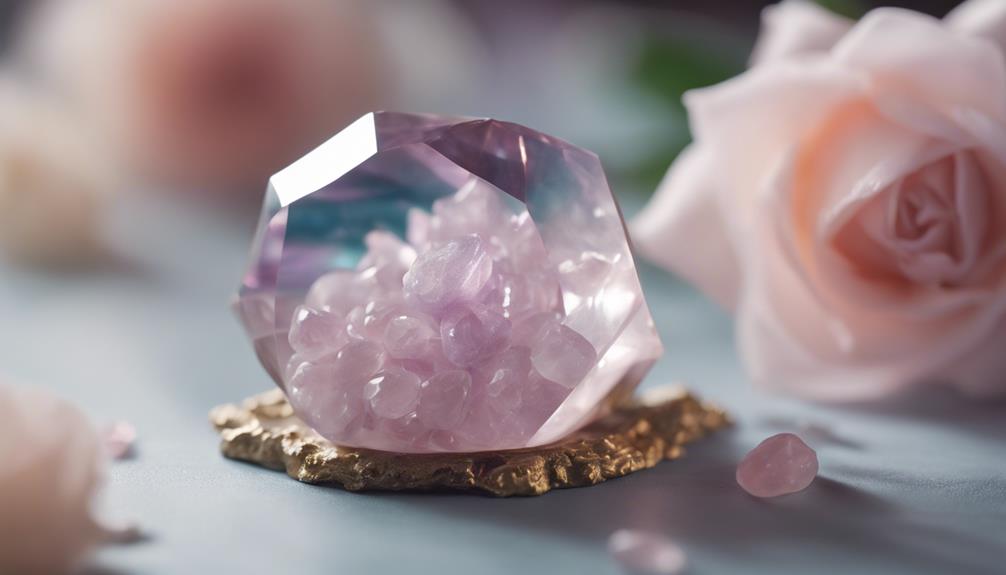
Alexandrite's unique color-changing properties create a complementary relationship with Rose Quartz, as together they enhance emotional healing and foster a deeper connection to love and positive energy. This powerful combination serves to amplify the nurturing qualities of Rose Quartz, which promotes self-love and emotional balance. Alexandrite, known for its manifestation capabilities, works synergistically with Rose Quartz to create an environment conducive to personal growth and emotional resilience.
The pairing of Alexandrite and Rose Quartz is particularly effective during meditation. Alexandrite enhances intuition and focus, allowing practitioners to explore deeper into their emotional landscape. Meanwhile, Rose Quartz fosters a sense of peace and unconditional love, creating a safe space for introspection and self-discovery. This harmonious blend not only supports individual healing but also cultivates creativity and compassion in interpersonal relationships.
When utilized in jewelry, Alexandrite and Rose Quartz create a visually striking piece that resonates with both beauty and emotional depth. Wearing these stones allows individuals to carry the energies of emotional healing and love throughout their day, serving as a constant reminder of their commitment to personal well-being.
Zodiac Compatibility Insights
Alexandrite serves as a birthstone for June, making it particularly relevant for individuals born under this month, specifically those aligned with the Gemini and Leo zodiac signs. Its connection to the fire element enhances the dynamic qualities of these signs, promoting creativity and leadership. This gemstone not only bolsters the inherent strengths of Gemini and Leo but also fosters personal growth and emotional balance, making it an ideal choice for those seeking to harness its unique properties.
Aligned With Gemini and Leo
The unique properties of Alexandrite make it a particularly advantageous gemstone for individuals born under the Gemini and Leo zodiac signs, enhancing their distinct traits and fostering personal growth. For Gemini, the alexandrite stone serves to amplify their natural adaptability and communication skills, aligning perfectly with their dual nature. Its remarkable color-changing properties symbolize the versatility of Gemini, enabling them to navigate diverse situations with ease.
In contrast, Leo individuals benefit from Alexandrite's ability to boost their inherent confidence and creativity. This gemstone resonates with Leo's desire for self-expression and leadership, acting as a powerful talisman in their quest for recognition and success. Furthermore, the healing properties of Alexandrite provide emotional balance, which is essential for both signs. It helps to maintain harmony in their personal and professional relationships, allowing them to thrive in various social dynamics.
Ultimately, Alexandrite offers Gemini and Leo a unique opportunity to harness their strengths while mitigating challenges, making it an invaluable addition to their personal and spiritual growth journey. By integrating this gemstone into their lives, both zodiac signs can open up their full potential.
June Birthstone Selection
As the birthstone for June, this enchanting gemstone not only symbolizes balance and harmony but also offers unique benefits tailored to the characteristics of individuals born under the Virgo and Gemini zodiac signs. The alexandrite meaning extends beyond mere aesthetics; it embodies the attributes of communication and analytical thinking, essential for these signs.
For Geminis, who thrive on creativity and adaptability, the healing properties of alexandrite enhance their ability to express ideas and navigate social environments effectively. This stone encourages the fluidity of thought, allowing Geminis to embrace change and innovation. Conversely, Virgos, known for their attention to detail and introspection, may find that alexandrite aids in achieving emotional equilibrium. Its soothing energy fosters self-reflection, helping Virgos align with their inner values and maintain clarity.
Furthermore, as a stone associated with the planet Mercury, alexandrite amplifies intellectual pursuits and effective communication, reinforcing its zodiac benefits for both Gemini and Virgo. Wearing or carrying this June birthstone is believed to attract good fortune and positive energy, making it a powerful talisman for those celebrating a June birthday, ultimately enhancing their life experiences.
Associated With Fire Element
Individuals who identify with the fire element—Aries, Leo, and Sagittarius—often experience a profound connection with the transformative properties of alexandrite, which enhances their innate qualities of passion, creativity, and emotional depth. This gemstone not only symbolizes the essence of fire but also provides essential healing properties that can ground and stabilize the intense energy characteristic of these zodiac signs.
The dynamic character of fire signs is mirrored in alexandrite's color-changing abilities, reflecting their adaptability. Wearing this gemstone can bolster self-confidence and creative expression, enabling fire sign individuals to pursue their ambitions with renewed enthusiasm. Furthermore, alexandrite serves as a powerful tool for emotional stability, helping to balance the often overwhelming impulses that accompany their passionate nature.
| Fire Sign | Benefits of Alexandrite |
|---|---|
| Aries | Enhances enthusiasm and drive |
| Leo | Boosts self-confidence and creativity |
| Sagittarius | Promotes emotional stability and adaptability |
| All | Aids in grounding intense energy |
| All | Fosters transformative emotional growth |
Incorporating alexandrite into their lives allows fire signs to harness their energy constructively, steering their passionate pursuits with clarity and purpose.
Crystal Facts and History

Alexandrite's historical significance is underscored by its popularity among royalty and its presence in notable jewelry pieces throughout the centuries. As a gemstone favored by Czar Alexander II, it symbolizes not only opulence but also the rarity and enchanting color-changing properties that have captivated collectors and enthusiasts alike. This rich heritage highlights the gemstone's esteemed position in both cultural lore and the luxury market, making it a subject of enduring fascination.
Notable Alexandrite Jewelry Pieces
The allure of notable Alexandrite jewelry pieces lies not only in their exceptional color-changing abilities but also in their rich historical significance, exemplified by creations such as the Imperial Alexandrite Necklace commissioned for the Russian Royal Family. This exquisite piece highlights the gemstone's rarity and luxurious appeal, making it a coveted item among collectors and enthusiasts.
Alexandrite, often referred to as “Emerald by day, Ruby by night,” is renowned for its unique ability to exhibit different colors under varying lighting conditions. Typically set in elegant rings, earrings, and pendants, this rare gemstone is not just aesthetically pleasing but also durable, with a hardness rating of 8.5 on the Mohs scale, making it suitable for everyday wear.
Notable sources of Alexandrite include Brazil, Sri Lanka, and Madagascar, with the Ural Mountains in Russia being the original and most celebrated source. The value of high-quality Alexandrite can be staggering, sometimes exceeding $30,000 per carat. Such exceptional qualities and historical significance guarantee that Alexandrite jewelry remains a timeless investment for those seeking beauty, rarity, and a touch of royal history.
Royalty's Favorite Gemstone
Renowned for its royal associations, Alexandrite's history is deeply intertwined with the Russian aristocracy, reflecting the gemstone's status as a symbol of wealth and prestige since its discovery in the 1830s. Discovered in the Ural Mountains of Russia, Alexandrite was named in honor of Tsar Alexander II, marking its significance within the Russian Empire during a period of opulence and power.
The gemstone quickly became a favorite among the elite, appreciated not only for its rarity but also for its unique ability to change color. Described as the 'Emerald by day, Ruby by night,' Alexandrite exhibits a remarkable transformation from green in natural light to reddish-purple under artificial light. This enchanting characteristic not only fascinated jewelers and collectors but also underscored its association with royalty and the extraordinary.
As the Russian Empire reached its zenith, Alexandrite was synonymous with the wealth of the ruling class, further solidifying its status as a luxury item. Today, Alexandrite remains one of the rarest and most valuable gemstones in the world, continuing to enchant those who seek beauty, rarity, and a connection to its illustrious royal heritage.
Historical Royalty and Alexandrite
Named after Czar Alexander II, Alexandrite emerged in the early 19th century as a gemstone emblematic of the wealth and opulence of the Russian imperial family, fundamentally shaping its historical narrative. Discovered in the Ural Mountains in the 1830s, the gemstone was initially mistaken for emerald due to its striking dense-green color. Its unique ability to change color—from green in daylight to purplish-red under incandescent light—captured the intrigue of Russian royalty, who embraced it as a symbol of luxury and sophistication.
As Alexandrite became increasingly popular among the aristocracy, it was frequently incorporated into royal jewelry, embodying the shifting fortunes of the Russian elite during a time of immense political change. The rarity of Alexandrite, along with its enchanting color-changing properties, solidified its status as one of the most sought-after gemstones in history.
With the decline of the Russian monarchy, the availability of Alexandrite diminished, further enhancing its allure and exclusivity. Today, this precious gemstone serves as a poignant reminder of the grandeur of historical royalty and the timeless luxury associated with it, enchanting collectors and enthusiasts alike.
Origin of Alexandrite Gemstone

The origin of the alexandrite gemstone is a multifaceted topic that encompasses its primary sources, particularly Russia and Brazil, where significant deposits have been uncovered. Analyzing its chemical structure reveals the unique characteristics that contribute to alexandrite's exceptional color-changing properties, a hallmark of this rare variety of chrysoberyl. Additionally, the methods of cutting and shaping the stone play an essential role in enhancing its distinctive visual effects, making it a sought-after gem in the market.
Brazil and Russia Sources
Alexandrite, a gemstone celebrated for its remarkable color-changing properties, was initially discovered in the Ural Mountains of Russia during the 1830s, where it gained recognition for its striking resemblance to emeralds before its true identity was established. Named after Tsar Alexander II, this remarkable gemstone quickly became a symbol of luxury and rarity.
While Russia remains historically significant for Alexandrite, Brazil emerged as another essential source, particularly during the 1980s. In Minas Gerais, substantial deposits of Alexandrite were uncovered, widely regarded for their unique color variations and quality. The Brazilian stones typically exhibit a more vivid color change than their Russian counterparts, which has made them highly sought after in the gemstone market.
Despite the prominence of Russia and Brazil, Alexandrite can also be found in other locations, including Sri Lanka, Tanzania, and Zimbabwe. However, these sources generally yield lower-quality stones. The formation of Alexandrite requires specific geological conditions, including high concentrations of beryllium and aluminum, alongside trace amounts of chromium, which contribute to its overall rarity and value. Understanding these sources is essential for gemstone enthusiasts and collectors prioritizing quality and authenticity in their purchases.
Chemical Structure and Characteristics
What defines the unique chemical structure and characteristics of this extraordinary gemstone is its composition as a type of chrysoberyl, specifically beryllium aluminum oxide (BeAl2O4), which incorporates trace amounts of chromium, responsible for its enchanting color-changing properties. The chemical structure of Alexandrite crystals contributes to several defining features:
- Pleochroism: Alexandrite exhibits a remarkable pleochroism, displaying different colors when observed from various angles. This characteristic adds to its allure and is particularly evident in varying light conditions.
- Mohs Hardness: With a hardness rating of 8.5 on the Mohs scale, Alexandrite is one of the toughest gemstones available, making it suitable for regular wear without significant risk of scratching or damage.
- Specific Gravity: The specific gravity of Alexandrite ranges from 3.50 to 3.74, indicating its relative density compared to other gemstones, which affects its overall weight and perceived value.
Understanding these chemical characteristics not only highlights the beauty of Alexandrite but also emphasizes its durability and unique optical phenomena, ensuring it remains a prized choice for both collectors and jewelry enthusiasts.
Color-Changing Properties of Alexandrite
Renowned for its enchanting ability to shift colors, the color-changing properties of Alexandrite are primarily attributed to the presence of chromium within its chemical structure, which interacts with varying light sources to produce distinct hues. This unique variety of chrysoberyl displays an impressive alteration, appearing green in daylight and shifting to a reddish-purple under incandescent light.
The gemstone's intriguing color change has earned it the moniker 'Emerald by day, Ruby by night,' highlighting its versatility and allure. Discovered in the Ural Mountains of Russia in the early 1830s, Alexandrite remains one of the most sought-after gemstones globally, celebrated for its rarity and stunning visual effects.
The following table summarizes the color attributes of Alexandrite based on different lighting conditions:
| Light Source | Color Observed | Characteristics |
|---|---|---|
| Natural Daylight | Green | Bright, vibrant hue |
| Incandescent Light | Reddish-Purple | Warm, rich coloration |
| Fluorescent Light | Bluish-Green | Cooler, more subdued tone |
| Candlelight | Purplish-Red | Romantic, soft glow |
| Mixed Lighting | Variable | Shifting hues based on light mix |
These properties contribute greatly to Alexandrite's charm and desirability.
Cut Styles and Forms
The diverse cut styles and forms of Alexandrite gemstones play a crucial role in enhancing their inherent beauty and showcasing the remarkable color-changing properties that make this gem so unique. Each cut style affects how light interacts with the stone, maximizing its brilliance and accentuating the enchanting shift from green to red hues.
- Round Cut: This classic style emphasizes the brilliance of Alexandrite, allowing for ideal light reflection.
- Cushion Cut: Known for its vintage appeal, the cushion cut showcases the gem's color-play while providing a softer, romantic look.
- Emerald Cut: This step-cut style highlights the clarity of the stone, making its color-changing properties more pronounced.
Due to its hardness of 8.5 on the Mohs scale, Alexandrite is perfect for various jewelry pieces, from rings to pendants, ensuring durability while allowing for intricate designs. High-quality Alexandrite is often faceted to enhance its clarity and color variation, making it a prized choice in the luxury jewelry market. The evolution of cutting techniques has been influenced by the original discovery of Alexandrite in the Ural Mountains, emphasizing the gem's rarity and visual appeal.
Alexandrite Price Ranges

The price of Alexandrite is influenced by various factors, including the quality of color change, clarity, and size, leading to a broad market range. High-quality specimens, particularly those with striking color variations, can reach prices upwards of $70,000 per carat, reflecting their rarity and desirability. Additionally, Alexandrite's increasing popularity as a unique choice for engagement rings further drives market values, especially for stones with historical significance and exceptional characteristics.
High-Quality Color-Change Specimens
High-quality color-change specimens of Alexandrite command impressive prices, typically ranging from $10,000 to $50,000 per carat, influenced by factors such as color intensity, clarity, and size. The most valuable Alexandrite showcases a remarkable shift from a vivid green to a purplish-red, particularly under varying lighting conditions. This striking color change is a hallmark of genuine Alexandrite, setting it apart from synthetic alexandrite, which lacks the same depth and allure.
Exceptional specimens are increasingly rare, especially those sourced from the original Russian deposits, which are highly coveted by collectors and investors alike. The rarity of these high-quality color-change specimens contributes considerably to their elevated market prices. In contrast, prices for lower-quality Alexandrite specimens start around $500 to $2,000 per carat, reflecting diminished color change and clarity.
As market demand for Alexandrite continues to rise, driven by its integration into fine jewelry collections, the value of high-quality pieces may further increase. Consequently, potential buyers should exercise caution and conduct thorough research to verify the authenticity and quality of the Alexandrite they intend to purchase.
Market Value of Alexandrite
Market value for Alexandrite varies widely, influenced by essential factors such as color quality, clarity, size, and geographic origin, resulting in price ranges from $50 to $15,000 per carat. The rarity of high-quality Alexandrite, particularly with vivid color change and minimal inclusions, considerably impacts its market value, often exceeding $10,000 per carat. Alexandrite over 5 carats is exceptionally rare and can command prices that soar beyond $100,000, particularly when sourced from Russia, which is noted for producing the most desirable specimens.
The following table illustrates the price ranges based on these critical factors:
| Quality | Price Range per Carat | Notes |
|---|---|---|
| Low-Quality | $50 – $1,000 | Poor color change, visible inclusions |
| Medium-Quality | $1,000 – $5,000 | Moderate color change, some inclusions |
| High-Quality | $5,000 – $15,000 | Vivid color change, few inclusions |
| Exceptional Quality | $15,000+ | Rare, large specimens with ideal properties |
This analysis highlights the intricate relationship between rarity, quality, and the gemstone's market value, ensuring informed decisions for potential buyers.
Worn in Engagement Rings
Engagement rings featuring Alexandrite are increasingly sought after, with prices typically ranging from $1,000 to over $30,000, influenced by factors such as stone quality, size, and color characteristics. The rarity of this unique gemstone, particularly those exhibiting a vivid color change, greatly impacts its market value. High-quality natural Alexandrite can command prices between $10,000 to $30,000 per carat, making it a luxurious choice for couples looking to make a distinctive statement.
Additionally, the custom nature of Alexandrite engagement rings often results in additional craftsmanship costs, further elevating the price. Each stone is unique, reflecting personal taste and style, which can enhance the emotional significance of the ring. As the birthstone for June, Alexandrite also carries profound healing properties, symbolizing love, balance, and transformation, further enhancing its appeal as an engagement ring.
Couples seeking alternatives to traditional diamond rings are increasingly drawn to Alexandrite, not only for its aesthetic qualities but also for its rich symbolism and unique characteristics. This gemstone represents a commitment that is both timeless and extraordinary, making it a meaningful choice for modern engagements.
Frequently Asked Questions
Which Zodiac Can Wear Alexandrite?
Individuals born under the zodiac signs of Gemini and Virgo are particularly aligned with Alexandrite symbolism. As the birthstone for June, Alexandrite embodies astrological compatibility for these signs, enhancing their traits. Geminis may benefit from its adaptability and communication enhancement, while Virgos can find support in self-esteem and emotional healing. Wearing Alexandrite is believed to promote a sense of balance and intuition, making it a valuable gemstone for those aligned with these zodiac signs.
What Are the Astrological Benefits of Alexandrite?
The astrological benefits of alexandrite are significant, particularly regarding its compatibility with Gemini and Virgo. As June's birthstone, it embodies growth and renewal, enhancing the traits of adaptability and analytical thinking. Its planetary influences are believed to promote self-esteem and emotional balance, aiding clarity in decision-making. Additionally, its birthstone associations suggest that alexandrite can attract abundance and prosperity, fostering social connections and opportunities for individuals under these zodiac signs.
What Are the Healing Powers of Alexandrite?
Alexandrite is renowned for its metaphysical properties that enhance both physical wellness effects and emotional healing benefits. Its purported ability to improve blood circulation and support organ recovery contributes to overall health. Additionally, it fosters spiritual growth significance by encouraging the release of limiting beliefs, promoting self-esteem, and facilitating personal development. This multifaceted gemstone is believed to influence the wearer's well-being, reflecting their emotional and physical states through its unique color-changing attributes.
What Is the Energy of Alexandrite?
The energy of Alexandrite is characterized by its remarkable color change, which reflects its dynamic properties. These Alexandrite vibrations foster an energy flow that enhances intuition, creativity, and emotional balance. The stone acts as a catalyst for personal transformation, promoting clarity in decision-making and grounding during meditation. Its ability to shift colors symbolizes adaptability, allowing individuals to navigate various life situations while maintaining inner peace and openness to new experiences.