Magnesite, composed of magnesium carbonate (MgCO₃), is valued for its healing properties and historical significance. This mineral, ranging in color from white to pink, aids in emotional wellness by promoting clarity and balance. It is known for stress relief, muscle relaxation, and is commonly used in meditation. Associated with the Crown and Heart Chakras, magnesite enhances spiritual connection and emotional stability, particularly when paired with amethyst. Its significance dates back to ancient Greek healing practices and remains valued in wellness communities. Learn about its diverse applications, geological traits, and cultural impact for a deeper appreciation.
Key Takeaways
- Promotes emotional clarity, grounding, and balance, aiding in the release of negative energies and supporting inner calm.
- Known for substantial stress-relief effects, enhancing muscle relaxation and alleviating tension, making it ideal for meditation.
- Associated with the Crown and Heart Chakras, fostering meditative states and stimulating creativity.
- Historically used in ancient Greek healing practices for digestive and skin conditions, and valued for its calming effects.
- Increasingly popular in wellness and spiritual communities, with high-value varieties driving market interest for boho-style accessories.
Crystal / Mineral Overview and Meaning
Magnesite, a frequently encountered mineral in the calcite group, is composed of magnesium carbonate (MgCO3) and forms primarily through the alteration of magnesium-rich rocks. Often manifesting in hues ranging from white to lilac-rose, magnesite exhibits a Mohs hardness of 3.5 to 4.5, underscoring its relatively soft nature. Its porous structure, a hallmark of its mineralogical identity, allows it to be dyed, thereby mimicking more prized gemstones such as turquoise, which enhances its desirability in the domain of jewelry.
Crucially, magnesite is esteemed not solely for its physical attributes but also for its profound implications in the realm of emotional healing. This mineral is reputed to foster emotional wellness by promoting grounding and balance. Its intrinsic properties resonate with individuals seeking emotional equilibrium, offering a conduit for releasing negative energies and fostering a state of inner calm. The healing potential of magnesite aligns with its historical significance, as it has been a staple in sculpture since 3000 BC, indicating its long-standing value across various cultures.
Magnesite's unique birefringence, which can induce facet-doubling effects, adds a layer of visual intrigue that complements its therapeutic benefits. As a tool in crystal healing practices, magnesite is revered for its ability to facilitate emotional clarity and bolster resilience against stressors. By serving as a medium for emotional healing, magnesite not only embodies aesthetic beauty but also symbolizes a journey towards emotional balance and inner peace. The duality of its physical and metaphysical properties makes magnesite a compelling mineral for both collectors and healers alike.
Stress Relief and Relaxation
Magnesite, also known as magnesium carbonate, is reputed for its substantial stress-relief and calming effects, often linked to its influence on the heart chakra. This mineral's unique properties facilitate emotional equilibrium and muscle relaxation, making it an ideal choice for stress management. Various application methods, such as incorporating magnesite into meditation practices or wearing it as jewelry, can enhance its therapeutic benefits, while regular cleansing guarantees its efficacy.
Alternative Names
Recognized for its calming properties, Baldissérite, also referred to as Giobertite, is a mineral known for its effectiveness in stress relief and relaxation practices. This healing stone, more commonly known as magnesite, is celebrated for its ability to induce a calming effect. Its high magnesium content is hypothesized to facilitate muscle relaxation and alleviate tension, which is vital for those seeking emotional wellness.
In the domain of crystal healing, magnesite's association with the Crown Chakra underscores its role in spiritual grounding and balance. During meditation, its soothing energy aids in clearing negative thought patterns, fostering a more positive and relaxed mindset. Users often report that wearing magnesite jewelry or keeping it nearby during stressful situations affords a sense of comfort and tranquility.
| Alternative Names | Context |
|---|---|
| Baldissérite | Scientific terminology |
| Giobertite | Historical reference |
| Magnesite | Common usage in healing |
The multifaceted names of magnesite reflect its rich history and versatile applications. Whether referred to as Baldissérite, Giobertite, or simply magnesite, this mineral remains a cornerstone in practices aimed at stress relief and relaxation. Its natural properties make it an indispensable tool for those seeking a balanced, serene state of mind.
Stress Relief and Calming Effects
Expanding on its diverse nomenclature and historical context, the mineral known as magnesite exhibits profound benefits in stress relief and relaxation. Celebrated for its calming effect, magnesite aids in balancing emotions and fostering a sense of tranquility during stressful situations. Its capacity for emotional healing is attributed to its ability to clear old emotional patterns, encouraging a positive outlook and emotional fluidity.
Magnesite's stress relief properties are further exemplified through its facilitation of muscle relaxation. This makes it particularly beneficial for individuals who experience physical tension due to stress or emotional turmoil. Regular incorporation of magnesite in meditative practices can amplify its calming effects, promoting deeper relaxation and enhanced mental clarity.
Furthermore, the soothing properties of magnesite support individuals under stress, cultivating feelings of safety and inner harmony. This holistic approach to stress management underscores magnesite's multifaceted role in emotional healing.
- Calming effect: Helps balance emotions and promote relaxation.
- Emotional healing: Clears old patterns, fostering a positive attitude.
- Stress relief: Alleviates anxiety and promotes emotional fluidity.
- Muscle relaxation: Beneficial for tension resulting from stress.
- Meditative enhancement: Deepens relaxation and mental clarity.
Application Methods for Magnesite
Often regarded as a cornerstone in holistic healing, the application methods for magnesite are diverse and scientifically founded, particularly in the area of stress relief and relaxation. Magnesite's calming energy makes it an effective tool for alleviating stress during meditation practices. One effective method involves holding the stone during mindfulness exercises to promote emotional balance. By placing magnesite on the body, individuals can further enhance its calming effect, leading to a deeper state of relaxation.
Incorporating magnesite into yoga sessions is another practical approach. Its grounding properties help alleviate tension in both the mind and body, fostering a more serene practice. Additionally, wearing magnesite jewelry, such as bracelets or necklaces, enables continuous exposure to its stress-relieving properties throughout the day. This continuous interaction guarantees an ongoing calming effect, supporting emotional equilibrium.
Moreover, regular cleansing of magnesite is essential to maintain its energetic efficiency. Techniques such as running water or sage smoke are recommended to guarantee the stone remains effective in stress relief applications. By integrating these methods, magnesite offers a multifaceted approach to achieving relaxation and emotional stability in daily life.
Cleansing Methods for Magnesite
Maintaining the energetic properties of magnesite requires regular and meticulous cleansing, which is essential for its efficacy in stress relief and relaxation practices. To guarantee magnesite remains potent, it should be regularly cleansed using methods such as running water, sage smoke, or sound vibrations. Each method offers a gentle yet effective way to purify the stone without compromising its integrity.
When cleansing magnesite, avoid harsh chemicals or extreme temperatures, as these conditions can damage its porous structure. Running water, preferably from a natural source, can wash away accumulated negative energies. Alternatively, sage smoke can be used to smudge the stone, enveloping it in soothing, purifying smoke. Sound vibrations, whether from a singing bowl or tuning fork, provide a non-invasive approach to cleanse and re-energize magnesite.
Post-cleansing, recharging magnesite by placing it under moonlight or within a crystal cluster further enhances its energy. Storing it in a soft pouch safeguards it from scratches, guaranteeing its quality is preserved. Regularly cleansed magnesite is particularly beneficial for stress relief, emotional balancing, and promoting relaxation during meditation practices, making these cleansing methods indispensable for maintaining its therapeutic efficacy.
Best Synergy: Magnesite With Amethyst
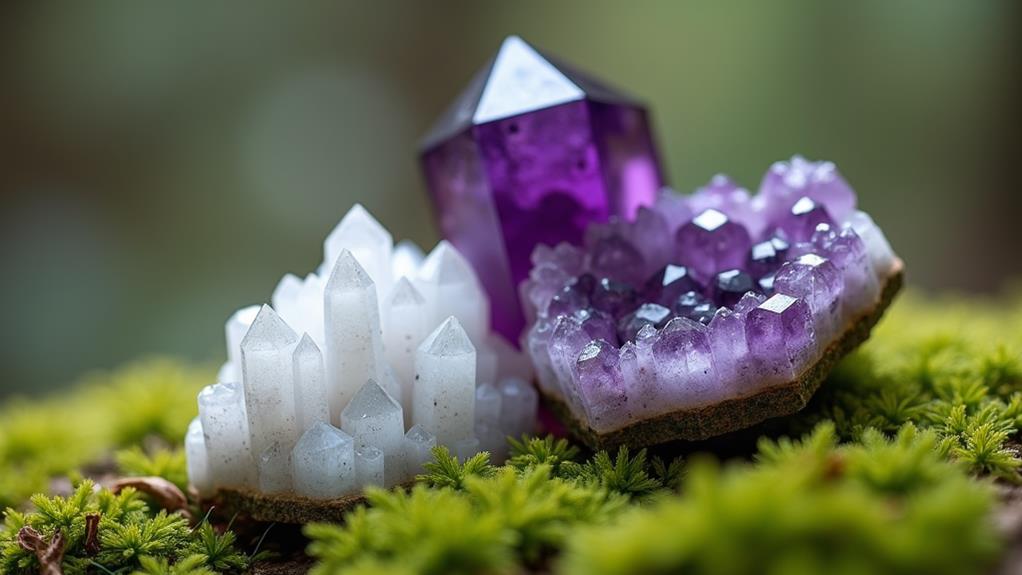
Combining magnesite and amethyst frequently results in a potent synergy that greatly enhances emotional stability and mental clarity. Magnesite, renowned for its grounding properties, promotes relaxation and tranquility, making it an ideal companion for stress relief. When paired with amethyst, which emanates calming energy, this duo becomes exceptionally effective in meditation practices aimed at achieving emotional equilibrium.
The distinct interplay between magnesite and amethyst fosters a balanced state of mind, imperative for deeper introspection and mental clarity. Magnesite's ability to anchor thoughts harmonizes seamlessly with amethyst's capacity to elevate spiritual awareness. This alignment considerably enhances one's ability to reflect and attain profound insights, thereby nurturing personal growth.
Both minerals are instrumental in stimulating the Crown Chakra. Magnesite supports cognitive clarity, while amethyst deepens spiritual connections, creating a robust energy flow that encourages holistic development. This dual activation of the Crown Chakra guarantees an integrated approach to mental and spiritual wellbeing, promoting a thorough sense of balance.
Moreover, the synergy between magnesite's soothing qualities and amethyst's protective nature is invaluable in mitigating negative thought patterns. This combination fosters a positive mindset and emotional resilience, essential components for enduring emotional stability. Individuals employing these stones in jewelry or energy healing sessions can amplify these benefits, leading to notable enhancements in emotional wellness and spiritual exploration.
In essence, the collaboration of magnesite and amethyst offers a multifaceted approach to emotional and mental health. By integrating their complementary properties, individuals can access a deeper, more stable emotional state, enriched by clarity and spiritual insight.
Zodiac Sign Compatibility
Magnesite's profound connection with Aries, the sign ruled by Mars, enhances the intrinsic qualities of courage and leadership while fostering emotional equilibrium. This mineral's properties counterbalance Aries' impulsive nature, promoting self-awareness and growth, thereby aiding in harmonizing interactions with other zodiac signs. Additionally, magnesite's alignment with Aries' fire element underscores its potential to mitigate stress and irritability, consequently improving compatibility with signs of differing elemental influences.
Zodiac Sign Compatibility Details
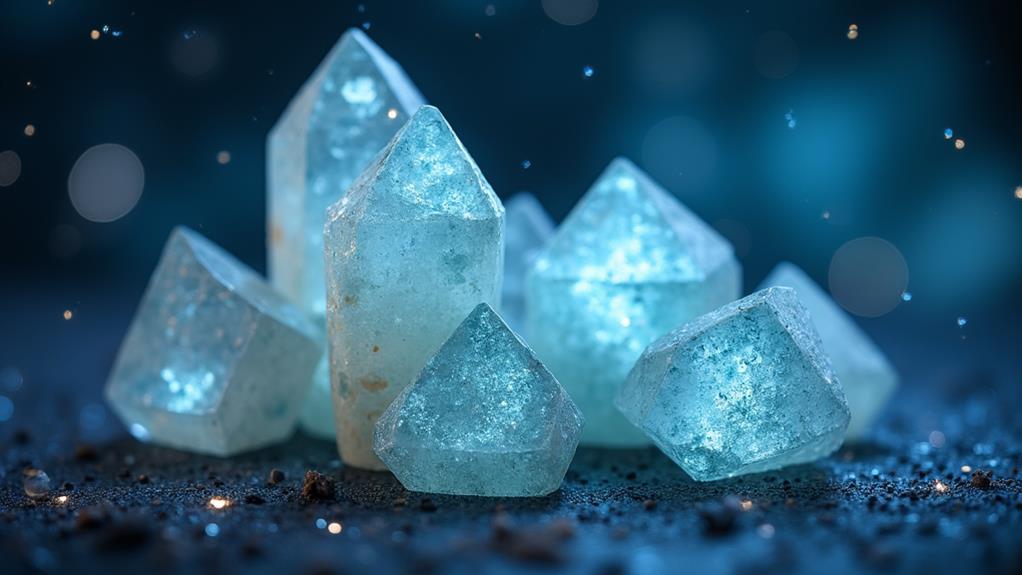
Enhancing the well-being of Aries individuals, magnesite plays an integral role in zodiac sign compatibility by promoting emotional stability and self-awareness. This mineral's calming properties are particularly beneficial for Aries, who are known for their impulsive tendencies. By resonating with the heart chakra, magnesite helps balance emotional patterns, offering a pathway to patience and emotional resilience in relationships.
Scientifically, magnesite's influence on Aries is linked to its frequency, which resonates with the number 3—symbolizing creativity and communication. These attributes are intrinsic to Aries personalities, aiding them in expressing their dynamic energy productively. The stone's ability to foster self-awareness enables Aries individuals to recognize and address their more challenging traits, such as impulsiveness and impatience, thereby promoting personal growth.
Moreover, the incorporation of magnesite into the daily life of an Aries can greatly enhance their emotional balance and self-reflection. This alignment supports them in steering their passionate nature with greater ease and composure. Fundamentally, magnesite serves as an essential tool for Aries, encouraging a harmonious integration of their fiery disposition with a more measured, introspective approach to emotional health and interpersonal relationships.
Birthstone Compatibility Insights

Understanding the significant impact of magnesite on Aries through the lens of zodiac sign compatibility naturally leads to an exploration of its role as a birthstone. Magnesite, resonating with the heart chakra and third eye chakra, offers Aries individuals profound benefits in enhancing self-awareness and promoting emotional balance. Its grounding and stabilizing properties are essential for managing the impulsive tendencies characteristic of this dynamic sign.
As an alternative birthstone for December, magnesite serves as a meaningful gift, amplifying its vibrational energy aligned with the number 3. This numerical association underscores creativity and social interactions, complementing Aries' innate dynamism and zest for life. Engaging with magnesite during meditation can enable Aries to discern and address both their positive and negative traits, fostering significant personal growth and emotional clarity.
The stone's influence extends further by aligning with the heart chakra, facilitating emotional healing and compassion, and the third eye chakra, enhancing intuitive insights. For Aries, the integration of magnesite into daily practice can lead to a more balanced and introspective existence, harmonizing their fiery nature with the calm, stabilizing energy of this remarkable mineral.
Ruling Element and Influence
The ruling element of magnesite, Earth, plays a crucial role in enhancing the compatibility of this mineral with the Zodiac sign Aries. Magnesite's grounding qualities inherently complement Aries' fiery nature, fostering a balance between impulsivity and emotional stability. Aries, known for their courage and leadership, can greatly benefit from magnesite's stabilizing influence, which aligns with their heart chakra, promoting harmony and self-control.
Magnesite's numerical vibration, the number 3, furthers its compatibility with Aries by encouraging creativity, communication, and social interaction. This synergy supports Aries individuals in channeling their innate dynamism into constructive endeavors. Additionally, the mineral's capacity for fostering self-reflection aids Aries in managing traits such as impatience and irritability, thereby enhancing personal growth.
Below is a detailed table illustrating these interactions:
| Aspect | Influence of Magnesite on Aries |
|---|---|
| Ruling Element | Earth – Provides stability and grounding |
| Heart Chakra | Promotes emotional stability and harmony |
| Numerical Vibration | 3 – Enhances creativity, communication, social interaction |
| Emotional Stability | Balances impulsivity, encourages self-reflection |
| Personal Growth | Supports recognition and management of challenging traits |
Historical Uses in Ancient Medicine
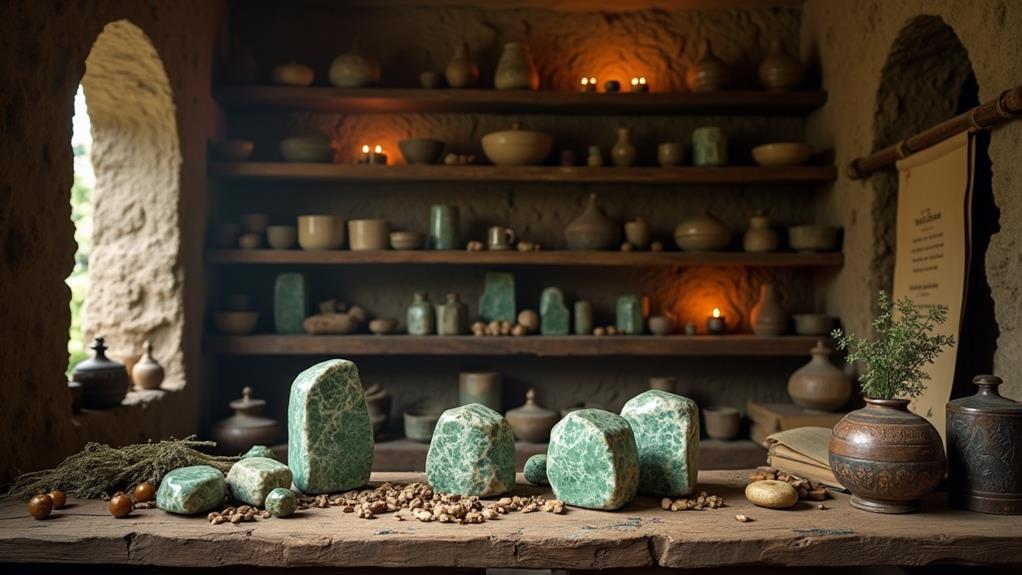
Magnesite's historical significance in ancient medicine is well-documented, particularly within Greek healing practices where it was employed for its therapeutic benefits on digestive and skin conditions. Aristotle's recognition of magnesite in the 4th century BC underscores its integration into early medicinal frameworks and the legends surrounding its uses. In addition, Cleopatra's reputed use of a magnesite amulet for protective and healing purposes highlights its esteemed status in ancient medical traditions.
Ancient Greek Healing Practices
Among the myriad of minerals employed in ancient Greek healing practices, magnesite held a prominent position due to its notable medicinal properties. Recognized for its extensive healing properties, magnesite was particularly esteemed for its ability to treat digestive disorders and skin ailments. Its name, derived from "magnesia lithos," connects it to the region of Magnesia in Thessaly, where this mineral was first identified.
Ancient Greek texts frequently extolled the calming effect of magnesite, which was believed to help balance emotions and enhance overall wellness. Greek healers exploited this tranquilizing attribute to address physical health concerns, such as muscle tension and spasms. They administered magnesite in various forms, including powders and tinctures, to optimize its therapeutic benefits.
The practical application of magnesite in ancient Greek medicine underscores its significance in historical healing traditions. Its efficacy in promoting emotional equilibrium and physical health laid a foundational understanding that transcended cultural boundaries, influencing subsequent medical practices. The utilization of magnesite by ancient Greek healers epitomizes a sophisticated approach to natural medicine, reflecting a deep-seated appreciation for the mineral's diverse healing properties.
Ancient Greek Magnesite Legends
Expanding on the profound medicinal applications of magnesite in ancient Greek healing practices, historical legends surrounding its use reveal a rich tapestry of cultural significance and therapeutic applications. Aristotle first described this mineral in the 4th century BC, naming it after the region of Magnesia in Greece, where it was originally discovered. The ancient Greeks, recognizing the healing properties of magnesite, frequently utilized it in their medicinal repertoire.
Magnesite, composed primarily of magnesium carbonate, was esteemed for its ability to aid in digestion and treat various skin ailments. Its high magnesium content was historically acknowledged for its potential health benefits, making it a cornerstone in folk medicine practices. Ancient texts suggest that magnesite was crushed into powders or mixed into ointments, showcasing its versatility in treating diverse conditions.
Beyond its medicinal uses, magnesite's significance extended to ancient Greek architecture, particularly in the construction of the Parthenon. This multifaceted mineral was not only a therapeutic agent but also a revered material in building and artistic endeavors. The historical legacy of magnesite, intertwined with both medicinal and cultural narratives, underscores its enduring importance in the annals of ancient Greek civilization.
Cleopatra's Magnesite Amulet
Revered for its healing properties, Cleopatra's magnesite amulet epitomized the ancient Egyptian integration of minerals into medicinal practices. Cleopatra, a renowned figure of antiquity, utilized magnesite in her amulets, not only as a symbol of protection and strength but also for its therapeutic benefits. The high magnesium content of magnesite was believed to support digestive health, reflecting the broader medicinal practices of the time, which aimed to alleviate various ailments through natural means.
Ancient Egyptians cherished magnesite for its association with health and wellness. This mineral's therapeutic potential was well-acknowledged, leading to its incorporation into a myriad of medicinal applications. The duality of magnesite's aesthetic appeal and its supposed health benefits was further evidenced by its use in ancient sculptures and jewelry, indicating a thorough appreciation of its qualities.
| Aspect | Details |
|---|---|
| Historical Figure | Cleopatra |
| Mineral Utilized | Magnesite |
| Believed Benefits | Digestive health support, protection, emotional balance |
| Cultural Significance | Valued in ancient Egyptian medicine, used in sculptures and jewelry |
Cleopatra's magnesite amulet stands as a demonstration of the ancient belief in the mineral's capacity to promote physical and emotional well-being, echoing broader cultural values that recognized its potential for enhancing overall health.
Ancient Greek Magnesite Origins
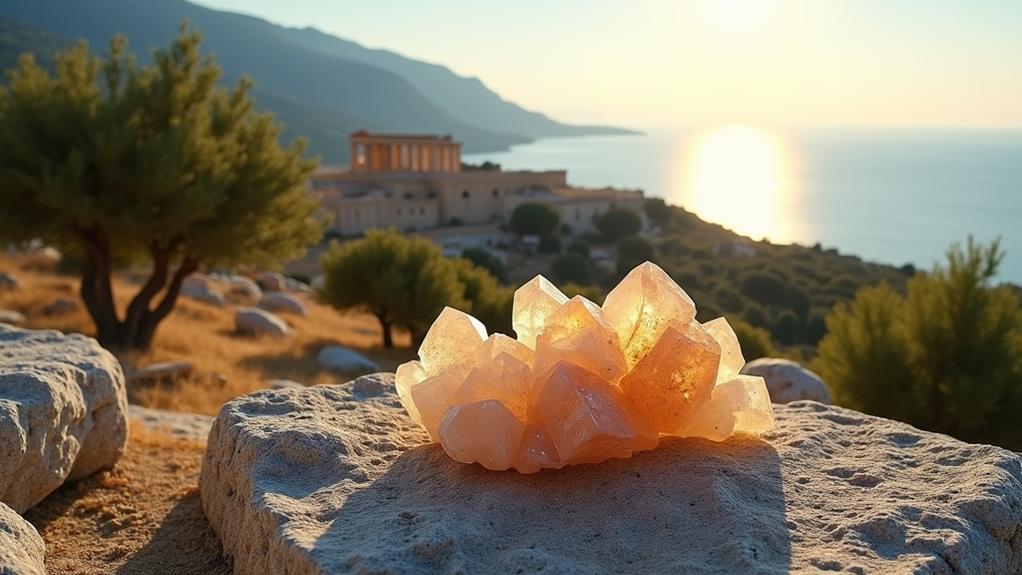
The ancient Greek mining sites in the region of Magnesia are renowned for their rich deposits of magnesite, a mineral primarily composed of magnesium carbonate. The diverse color range of magnesite, from white to grey and sometimes yellow or brown, is attributed to various trace elements and impurities. This color diversity and the distinctive shapes of magnesite crystals made it a significant material in both ancient Greek architecture and early scientific study.
Ancient Greek Mining Sites
Situated in the region of Magnesia, Thessaly, ancient Greek mining sites for magnesite are notable for their historical and geological significance. These sites, rich in magnesite deposits, are where the mineral derived its name. Historical records reveal that ancient Greek mining of magnesite was extensive, with the mineral being utilized for an array of purposes, including construction and medicinal applications. The Greeks were astutely aware of magnesite's unique properties, leveraging its durability and resistance to weathering to create lasting structures.
One of the most iconic uses of magnesite in ancient Greece was in the construction of the Parthenon. This majestic structure stands as a proof of the mineral's robustness. In addition, magnesite's aesthetic appeal made it a favored choice for sculptures and decorative items, dating back as early as 3000 BC. The Greeks also explored the healing properties of magnesite, incorporating it into their medicinal practices, thereby acknowledging its multifaceted utility.
The mining techniques refined in ancient Greece for extracting magnesite laid a foundational framework for its subsequent industrial applications. This historical exploration underscores the enduring legacy of magnesite, intertwining its geological significance with cultural and practical utilization.
Magnesium Carbonate Composition
Magnesium carbonate, with the chemical formula MgCO3, forms the primary constituent of magnesite, a mineral of significant geological and historical importance. Magnesite is classified as a carbonate mineral within the calcite group, highlighting its intrinsic relationship with other carbonate minerals. The etymology of "magnesite" traces back to the Ancient Greek term "magnesia lithos," denoting both its high magnesium content and its historical association with the Magnesia region in Thessaly, Greece.
Magnesite typically forms through the alteration of magnesium-rich minerals and is often found in sedimentary rocks, particularly in environments characterized by low-grade metamorphism. This unique formation process contributes to its distinct porous structure, which facilitates dye absorption, enabling magnesite to imitate more aesthetically valued gemstones such as turquoise.
Key characteristics of magnesium carbonate composition in magnesite include:
- Chemical Formula: Composed primarily of MgCO3.
- Geological Formation: Develops through the alteration of magnesium-rich minerals.
- Sedimentary Occurrence: Commonly found in low-grade metamorphic sedimentary rocks.
- Porous Structure: Allows for dye absorption, enhancing its aesthetic versatility.
- Historical Usage: Documented use in sculptures dating back to 3000 BC, underscoring its cultural and practical significance.
The geological and historical facets of magnesite underscore its enduring value and multifaceted applications.
Color Range and Variations
A spectrum of hues characterizes magnesite, ranging from pristine white to delicate lilac-rose, influenced by its trace elemental composition. This mineral, derived from magnesium-rich rocks, owes its name to the ancient Greek term "magnesia lithos" and its association with the region of Magnesia in Greece. The primary chemical structure of magnesite, magnesium carbonate (MgCO3), underpins its varied color range.
The presence of impurities such as iron and calcium greatly impacts magnesite's appearance and market value. For example, nickel-rich magnesite, known as Lemon Chrysoprase, can exhibit yellow-green hues, adding to the mineral's aesthetic diversity. Another notable variant is Verd Antique, which showcases a striking green marbled appearance. These variations not only reflect the mineral's chemical diversity but also enhance its allure in gemstone markets.
Magnesite offers a unique visual spectrum, with each color variation hinting at different geological processes and elemental influences. The mineral's color range is an indication of its formation within sedimentary rock formations, where trace elements and impurities interact to create its distinct hues. This intricate interplay of natural factors makes magnesite a fascinating subject for both geological study and decorative use.
Color Diversity and Shapes
The color diversity and unique shapes of magnesite further enrich its geological and aesthetic significance. Primarily composed of magnesium carbonate (MgCO3), magnesite presents a spectrum of colors, from pure white and gray to subtle shades of yellow and pink. Rarely, it can exhibit a striking yellow-green hue, known as Lemon Chrysoprase, due to nickel content. The stone's origins trace back to the ancient Greek region of Magnesia, underscoring its rich historical and mineralogical heritage.
Magnesite often forms in massive, fibrous, or finely-grained structures, which contributes to its varied and unique shapes. Unlike other minerals that frequently crystallize, these forms make magnesite a versatile material for various applications, including magnesite beads.
- Color diversity: Encompasses white, gray, yellow, pink, and rare vibrant yellow-green hues.
- Shapes: Generally massive, fibrous, or fine-grained.
- Porosity: Allows for easy dyeing, enhancing its color spectrum.
- Historical significance: Used decoratively since ancient times.
- Magnesite beads: Popular in jewelry due to their unique appearance and versatility.
The porous nature of magnesite facilitates dyeing processes, enabling it to mimic gemstones like turquoise or lapis lazuli, thereby broadening its aesthetic applications and appeal.
Crystal Quality and Market Demand
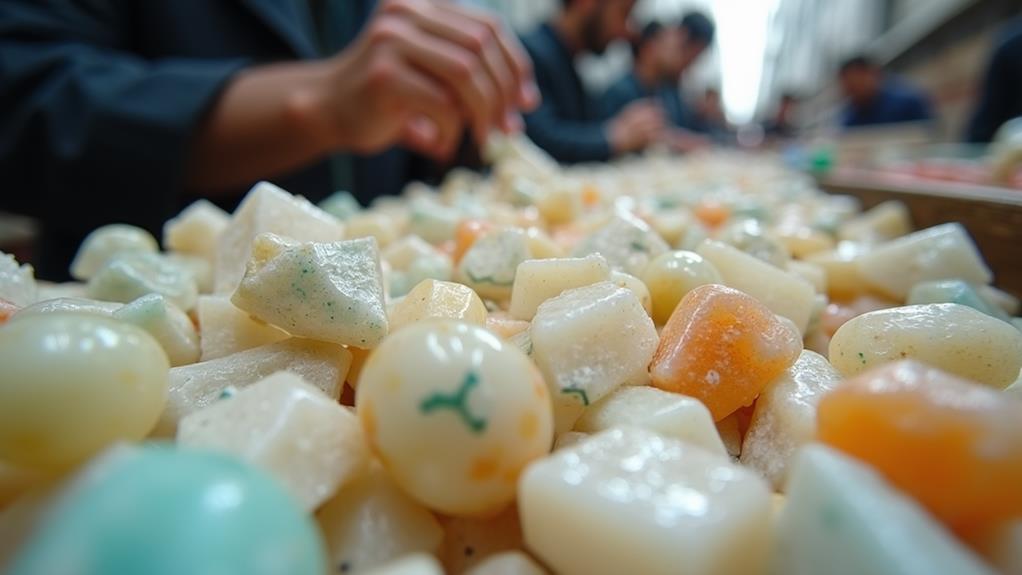
The valuation of magnesite is intrinsically linked to its quality, with high-grade specimens fetching premium prices due to their aesthetic and structural properties. While industrial-grade magnesite is priced at approximately $1,600 per ton, its affordability in the jewelry market—often under $1 per carat—has made it a popular choice for boho-style accessories. The increasing availability of high-quality magnesite in wellness and spiritual communities has further driven market demand, reflecting its multifaceted applications and consumer appeal.
High-Value Magnesite Varieties
Lemon Chrysoprase and Verd Antique exemplify high-value magnesite varieties, prized for their distinctive hues and intricate patterns, which drive considerable demand in both the jewelry and crystal markets. These varieties, with their vibrant colors and unique textures, stand out in the domain of gem-quality magnesite, enhancing their market value. Prystine magnesite, renowned for its pure-white, fine-grained appearance, is particularly sought after and commands premium prices due to its rarity and aesthetic appeal.
The global demand for magnesite, influenced by its various industrial applications, also plays a role in its market value. Rough white magnesite may be priced under $1 per carat, whereas more polished and unique varieties, such as those produced in Brazil, attract higher prices. The meticulous craftsmanship involved in magnesite jewelry and decorative items greatly influences pricing, with intricately designed pieces often reaching premium prices due to their artistic value and quality.
| Magnesite Variety | Characteristics |
|---|---|
| Lemon Chrysoprase | Distinctive yellow-green hues |
| Verd Antique | Intricate veining and patterns |
| Prystine Magnesite | Pure-white, fine-grained texture |
This detailed analysis underscores the nuanced factors driving the desirability and market value of high-value magnesite varieties, making them coveted assets in both the jewelry and collectors' markets.
Market Price and Valuation Factors
Understanding the market price and valuation factors of magnesite requires a detailed analysis of crystal quality and market demand. The current industrial price of magnesite in the USA stands at approximately $1,600 per ton, largely driven by its extensive industrial uses, such as in refractory materials and magnesium metal production. This valuation is influenced by global demand, which continues to rise due to the mineral's versatility.
In the gemstone market, rough white magnesite is available for under $1 per carat, reflecting its accessibility. However, the valuation increases when the mineral is crafted into beaded strands, priced under $10, and further escalates for jewelry items like earrings and pendants, which range from $10 to $20. These price variations are contingent on factors such as quality, color, size, and unique traits or patterns, which enhance its aesthetic appeal.
The global demand for magnesite is not only fueled by its industrial applications but also by its metaphysical properties, leading to a broader market base. Consequently, the market price is a dynamic interplay between industrial necessity and consumer preference for ornamental and functional uses.
Popular in Boho-Style Accessories
Magnesite's significance extends beyond its industrial and gemstone market valuation, finding a prominent place in boho-style accessories due to its unique characteristics. The stone's porous nature enables easy dyeing, allowing for vibrant colors and intricate patterns that are quintessential in boho-style accessories. This versatility is augmented by magnesite's affordability, with raw stones priced under $1 per carat and finished jewelry items typically ranging from $10-$20, catering to a broad market segment.
Moreover, magnesite's association with spiritual healing properties, particularly its purported ability to alleviate emotional stress and enhance creativity, aligns seamlessly with the bohemian ethos. This demographic often seeks items that provide both aesthetic appeal and metaphysical benefits, making magnesite an ideal choice. The trend toward eco-friendly and sustainable fashion further bolsters magnesite's demand. Artisans increasingly favor responsibly sourced magnesite for its ethical alignment and consumer appeal.
In terms of design versatility, magnesite's adaptability—from beaded strands to polished cabochons—offers ample opportunities for creative expression and personalization in boho-style accessories. Hence, the stone's intrinsic and extrinsic qualities guarantee its continued popularity and high market demand within this fashion niche.
Frequently Asked Questions
What Are the Healing Properties of Magnesite?
Magnesite exhibits potent healing properties, harmonizing magnesite energy to foster emotional stability and stress alleviation. It aids in magnesite grounding, promoting relaxation during meditation and enhancing self-awareness. By encouraging the release of negative thought patterns, magnesite supports personal growth and emotional healing. Additionally, it aids physical well-being by relieving muscle tension, treating cramps, and bolstering digestive health, while also stimulating creativity and balancing brain hemispheres.
What Is the Spiritual Use of Magnesite?
Magnesite is highly valued in spiritual spheres for its efficacy in meditative practices. It enhances emotional balance by fostering self-awareness and dissipating negative emotional patterns. The mineral is instrumental in energy cleansing, facilitating clear communication with spiritual guides and higher dimensions. Its activation of the Crown Chakra promotes a deeper connection to the Akashic records and collective consciousness, thereby enriching one's spiritual insights and psychic awareness.
What Is Magnesite Stone Used For?
Magnesite applications are diverse, ranging from industrial to metaphysical uses. Sourced primarily for its magnesium content, magnesite is essential in producing alloys, refractory materials, and magnesium metal products. In crystal healing, magnesite symbolism is significant, promoting emotional wellness and creativity, and is often crafted into jewelry. Additionally, it supports physical healing and spiritual practices, aiding in muscle relaxation, detoxification, and emotional stability, thereby enhancing self-awareness and relationships.
What Chakra Is Magnesite Associated With?
Magnesite is closely associated with the Crown Chakra. The properties of magnesite aid in Chakra balancing by enhancing spiritual growth and mental clarity. It facilitates energy flow through the Crown Chakra, promoting emotional stability and a deeper meditation experience. By activating this chakra, magnesite fosters a sense of peace and connection to the universe, encouraging users to embrace their intuition and spiritual insights effectively.


