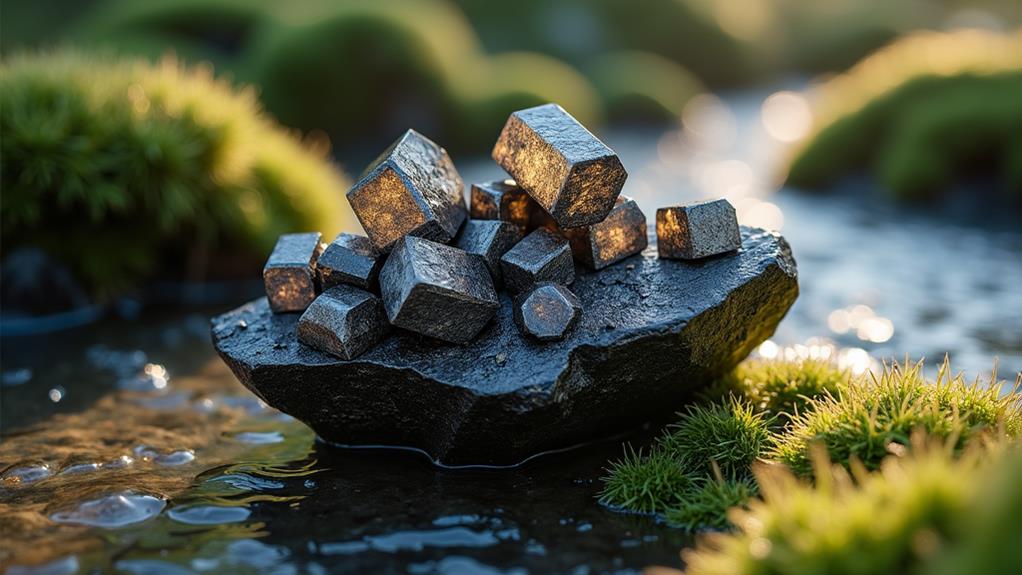
Magnetite, or Lodestone, is an iron oxide mineral distinguished by its strong magnetic properties and metallic luster, exhibiting a Mohs hardness of 5.5 to 6.5. Its robust magnetism is utilized in historical navigation, while its grounding energy links it to the Root Chakra, promoting stability and emotional equilibrium. This mineral supports hormonal balance and fertility, believed to alleviate stress and anxiety. It also enhances bone health by stimulating bone marrow production and offering anti-inflammatory benefits. Magnetite's compatibility with zodiac signs such as Aries, Virgo, Capricorn, and Aquarius augments its holistic applications. Discover insights into its cultural significance and advanced uses.
Key Takeaways
- Magnetite aligns with the Root Chakra, promoting grounding energy, stability, and emotional balance.
- Known as the "Stone of Manifestation," magnetite supports hormonal balance and enhances fertility.
- Historically used for navigation and therapeutic purposes, symbolizing attraction and healing.
- Magnetite's strong magnetic properties make it valuable for scientific, industrial, and jewelry applications.
- Cleansing magnetite with moonlight or smudging maintains its energy and amplifies its healing properties.
Crystal / Mineral Overview and Meaning
Magnetite, also referred to as Lodestone or Magnetic Iron Ore, is a naturally occurring iron oxide mineral recognized for its robust magnetic properties and dark metallic black color. Exhibiting a Mohs hardness rating between 5.5 and 6.5, Magnetite is not only durable but also suitable for crafting into jewelry, making it accessible for everyday use. This mineral's historical significance is notable; it was utilized in ancient navigation, with its magnetic qualities first documented in the region of Magnesia, Greece.
From a metaphysical perspective, Magnetite is intrinsically linked to the Root Chakra. This association underscores its role in promoting grounding energy, stability, and a profound connection to the Earth. The grounding energy of Magnetite is particularly potent, fostering a sense of stability and balance in individuals who engage with it. By enhancing energy flow, Magnetite facilitates a harmonious alignment of the body's energies, which can be pivotal for emotional healing.
The healing properties of Magnetite extend to the emotional sphere, where it is revered for its ability to attract positive energies. This mineral serves as an ally in personal development by alleviating negative emotions such as fear and grief. In its capacity to support emotional healing, Magnetite enables individuals to navigate their emotional landscapes with greater resilience and clarity. Its magnetic nature symbolically attracts tranquility and dispels negativity, making it an invaluable tool for those seeking emotional equilibrium.
Hormonal Balance and Fertility
Magnetite, often referred to as the "Stone of Manifestation," is reputed for its potential to regulate the endocrine system, thereby aiding in hormonal balance and enhancing fertility. Its intrinsic grounding properties help mitigate stress and anxiety, fostering an ideal hormonal environment. Moreover, Magnetite's association with the Root Chakra is believed to enhance emotional stability and blood circulation, factors critical to reproductive health.
Magnetite's Nickname
Known for its profound impact on hormonal regulation, this mineral is often nicknamed the "Hormonal Balancer" due to its reputed benefits for reproductive health and fertility. Magnetite is acclaimed for its ability to support hormonal equilibrium, thereby enhancing reproductive health in both men and women. Its association with the Sacral Chakra, a crucial energy center linked to creativity, emotions, and reproductive functions, underscores its role in promoting overall vitality and emotional balance.
The grounding properties of Magnetite are particularly remarkable, as they contribute to reducing stress and anxiety, factors that can greatly affect hormonal regulation and, consequently, fertility. By fostering a stable emotional environment, Magnetite aids in mitigating symptoms associated with hormonal imbalances, such as mood swings and menstrual discomfort, thereby supporting a more harmonious reproductive system.
In holistic practices, Magnetite is often utilized to alleviate these symptoms and enhance courage and strength, essential for individuals traversing their fertility journeys. Whether through meditation or as jewelry, the consistent use of Magnetite is believed to fortify one's resolve and promote a balanced, resilient state conducive to reproductive health and well-being.
Bone Health Benefits
Enhancing bone health through natural means has garnered substantial interest, particularly with minerals like Magnetite that show potential benefits. Magnetite is reputed for its ability to stimulate bone marrow production, which plays a crucial role in blood oxygenation and overall liveliness. This mineral's grounding properties are thought to facilitate hormonal balance, essential for maintaining bone density and preventing osteoporosis. Magnetite's anti-inflammatory benefits may also alleviate the discomfort associated with bone-related issues, thereby enhancing mobility and quality of life.
Beyond these advantages, Magnetite is believed to be beneficial for fertility by regulating reproductive hormones and supporting healthy hormonal function. Regular incorporation of Magnetite in healing practices can potentially enhance physical strength, thereby providing a robust foundation for bone health.
Key benefits of Magnetite for bone health include:
- Stimulates bone marrow production: Enhances blood oxygenation and overall liveliness.
- Promotes hormonal balance: Essential for maintaining bone density and bone health.
- Anti-inflammatory benefits: Alleviates discomfort associated with bone-related issues.
- Supports fertility: Regulates reproductive hormones and supports overall hormonal function.
Meditation Techniques Using Magnetite
Incorporating Magnetite into meditation practices can serve as a powerful method for promoting hormonal balance and enhancing fertility. By aligning the Root Chakra, magnetite fosters stability and grounding, which are essential for reproductive health. Meditation with magnetite enhances emotional healing by releasing negative emotions that can hinder fertility and disrupt hormonal regulation.
Holding or placing magnetite on the body during meditation amplifies intentions related to reproductive well-being, creating a focused energy flow. This practice not only promotes a positive mindset but also invites abundance and potential conception through its protective and grounding properties.
Regular meditation with magnetite stimulates energy flow in the reproductive organs, supporting overall hormonal balance and enhancing emotional resilience.
| Benefits of Magnetite in Meditation | Methods | Effects on Fertility |
|---|---|---|
| Supports hormonal balance | Holding or placing on body | Aligns Root Chakra |
| Enhances emotional healing | Focused intentions | Releases negative emotions |
| Promotes stability and grounding | Regular use | Stimulates reproductive energy |
| Creates focused energy flow | Meditation practices | Enhances emotional resilience |
| Invites abundance and conception | Positive mindset | Supports reproductive health |
How to Purify Magnetite
Purifying magnetite, especially for the purposes of hormonal balance and fertility, necessitates a systematic approach to maintain its efficacy. Regular cleansing is vital to remove negative energies that the mineral absorbs over time. One effective method involves soaking the magnetite briefly in clean water, guaranteeing it is not exposed to prolonged moisture to avoid deterioration. Alternatively, smudging with sage can also cleanse the stone, stripping away any accumulated negative energies and restoring its natural vibrational frequency.
To enhance magnetite's purifying properties, exposure to moonlight is particularly beneficial. The lunar energy aligns the mineral with natural cycles, which are intrinsically linked to fertility and hormonal stability. Strategically placing magnetite on selenite or clear quartz further amplifies its purifying properties, facilitating a more profound cleanse and promoting emotional stability.
Continuing this regimen guarantees that magnetite retains its ideal vibrational frequency, which is essential for fostering reproductive health and emotional equilibrium. Integrating these cleansing practices into a regular routine will preserve the magnetite's potency, supporting its role in enhancing hormonal balance and fertility. As a result, maintaining the purity of magnetite is integral to harnessing its full therapeutic potential.
Ideal Crystal Combinations

For practitioners seeking to harness the full potential of Magnetite, understanding its ideal crystal combinations is crucial. Known for its grounding stone properties, Magnetite can be strategically paired with other minerals to enhance its effects, promoting emotional balance and spiritual growth.
Magnetite, when combined with Almandine, fortifies stability and courage, creating a potent grounding effect. This combination is particularly effective during meditation and healing practices, ensuring a deep-rooted connection to the earth. Additionally, Garnet and Diopside, when used alongside Magnetite, stimulate passion and energy. This trio works synergistically to promote emotional balance and creative expression, important for those seeking to harmonize their inner energies.
Utilizing Magnetite with Biotite facilitates clearer communication and grounding, ensuring a harmonious flow of energy during personal interactions. This pairing can be particularly beneficial in maintaining equilibrium in relationships and professional settings. Moreover, the combination of Magnetite with Azurite greatly amplifies intuition and psychic abilities, aiding in spiritual growth and clarity of thought. This duo is ideal for those on a path of self-discovery and heightened awareness.
Lastly, Magnetite and Clinochlore work together to promote emotional healing and compassion. This nurturing combination fosters an environment conducive to personal transformation, making it an excellent choice for those undergoing considerable life changes or seeking inner peace.
Below is a detailed table illustrating these ideal combinations:
| Crystal Combination | Primary Benefit | Secondary Effect |
|---|---|---|
| Magnetite + Almandine | Stability, Courage | Grounding |
| Magnetite + Garnet + Diopside | Passion, Energy | Emotional Balance |
| Magnetite + Biotite | Clear Communication | Harmonious Energy Flow |
| Magnetite + Azurite | Intuition, Psychic Abilities | Spiritual Growth |
| Magnetite + Clinochlore | Emotional Healing | Compassion |
These combinations, when utilized correctly, can greatly enhance the inherent properties of Magnetite, making it a versatile and powerful ally in one's spiritual and emotional journey.
Zodiac Sign Compatibility

Magnetite demonstrates notable compatibility with the zodiac signs Aries, Virgo, Capricorn, and Aquarius, each benefiting from its unique properties. Particularly advantageous during their respective birth months, Magnetite's alignment with the elements of Fire, Earth, and Air underpins its ability to enhance qualities such as courage, grounding, stability, and innovation. This mineral's interaction with these signs provides a compelling study in how elemental associations can amplify personal energies and attributes.
Ideal Zodiac Matches
Exploring the compatibility of Magnetite with various zodiac signs reveals a fascinating interplay between mineral properties and astrological characteristics. This magnetic mineral's grounding properties and ability to channel positive energy make it particularly beneficial for Aries, Virgo, Capricorn, and Aquarius.
| Zodiac Sign | Key Traits Enhanced by Magnetite | Benefits |
|---|---|---|
| Aries | Courage, Assertiveness | Aligns with dynamic nature |
| Virgo | Organization, Focus | Complements analytical traits |
| Capricorn | Stability, Balance | Reinforces ambition |
| Aquarius | Innovation, Humanitarianism | Supports visionary ideas |
For Aries, Magnetite promotes courage and assertiveness, aligning perfectly with their dynamic and adventurous disposition. This mineral's grounding properties can temper Aries' impulsive tendencies, providing a balanced approach.
Virgos, known for their analytical mind and meticulous nature, benefit from Magnetite's grounding properties, which aid in organization and focus. This synergy enhances their ability to manage details effectively, fulfilling their need for precision.
Capricorn individuals find a source of stability and balance through Magnetite, reinforcing their natural ambition and determination. This mineral's grounding energy supports Capricorn's structured approach to achieving goals.
For Aquarius, Magnetite enhances their innovative and humanitarian tendencies. The positive energy of Magnetite supports Aquarius' unique perspective and visionary ideas, enabling them to manifest their creative solutions in the world.
Associated Birth Month
Zodiac sign compatibility with Magnetite reveals intriguing insights into how this mineral's properties align with the inherent traits of individuals born under specific astrological signs. Aries, Virgo, Capricorn, and Aquarius are particularly influenced by Magnetite's unique attributes, enhancing their natural predispositions and providing essential grounding properties.
For Aries, Magnetite serves as a catalyst for courage and decisive action. Its energy amplifies leadership qualities, fostering a bold and assertive demeanor ideal for overcoming challenges. The mineral's grounding properties offer Aries a stable foundation from which to pursue their ambitions.
Virgo individuals find solace in Magnetite's ability to promote emotional balance and stability. This mineral aids in managing stress and anxiety, creating a harmonious internal environment that allows Virgos to thrive.
Capricorn natives benefit from Magnetite's grounding properties, enhancing their inherent determination and focus. This alignment supports their ambitious pursuits, providing the tenacity required to achieve their goals.
For Aquarius, Magnetite harmonizes creativity and innovation. The mineral's stabilizing influence aligns their unique perspectives with a sense of balance, fostering both originality and practicality.
Elemental Association With Magnetite
In the domain of metaphysical properties, the elemental association with Magnetite is particularly significant due to its strong affiliation with the Earth element. This association underscores Magnetite's intrinsic qualities of grounding and stability, making it an essential mineral for enhancing one's connection to the physical plane. By resonating with the Base Chakra, Magnetite bolsters feelings of safety and security, laying a robust foundation for emotional and psychological well-being.
Astrologically, Magnetite's stabilizing energies align harmoniously with certain zodiac signs. Aries, Virgo, Capricorn, and Aquarius particularly benefit from its grounding influence. Aries, with its dynamic and often impulsive nature, finds balance and focus through Magnetite's steadying properties. Virgo, inherently linked to Earth, experiences enhanced clarity and organizational prowess. Capricorn, whose ambitions are deeply rooted in structure, finds additional support in achieving their goals. Meanwhile, Aquarius, known for its intellectual and innovative spirit, gains a stabilizing anchor, fostering emotional resilience.
The numerical vibration of Magnetite, represented by Number 4, signifies stability, structure, and a solid foundation. This vibrational quality further accentuates its ability to promote balance and harmony, making it a quintessential tool for personal development and astrological alignment.
Magnetite in Ancient Greece

In ancient Greece, magnetite, referred to as Lodestone, was instrumental in navigation, providing early sailors with a reliable means of directional orientation. Additionally, magnetite's therapeutic potential was explored in ancient medicine practices, where it was believed to possess healing properties. Cleopatra reportedly utilized magnetite in her beauty regimens, reflecting its multifaceted applications and esteemed status in historical contexts.
Lodestone Navigational Use
Ancient Greek navigators harnessed the unique properties of lodestone, a naturally magnetic form of magnetite, to revolutionize maritime travel. Recognized for its magnetic properties as early as 2500 BC, lodestone became an indispensable tool for the ancient Greeks, greatly enhancing their navigation capabilities. This mineral's ability to align with the Earth's magnetic field allowed sailors to determine their direction with unprecedented accuracy, thereby facilitating more reliable sea voyages.
The term "lodestone" itself, derived from its capacity to "lead" or guide, underscores its critical role in navigation. Ancient Greeks would meticulously observe the alignment of lodestones, utilizing their consistent magnetic orientation to establish cardinal points. This method marked a pivotal advancement in maritime exploration techniques, setting the foundation for subsequent navigational innovations.
Ancient Medicine Practices Involving Magnetite
The ancient Greeks' exploration of magnetite extended beyond its navigational utilities, delving into its potential therapeutic applications. Known as Lodestone, this mineral's magnetic properties captivated the minds of ancient civilizations, particularly in ancient Greece, where it was employed for its healing properties. The Greeks, astutely recognizing the mineral's ability to attract and direct energy, incorporated magnetite into their acupuncture practices. By strategically placing magnetite on specific body points, they aimed to enhance the flow of essential energy, or "qi," believing that this could alleviate a range of ailments.
Ancient texts provide compelling evidence of magnetite's use in treating muscle pain and inflammation. The magnetic properties of this mineral were thought to promote natural healing by increasing blood flow and reducing swelling. In addition to its physical benefits, magnetite was also believed to possess metaphysical capabilities. The Greeks fashioned protective amulets from this mineral, convinced that it could repel negative influences and attract positive energies, thereby safeguarding the wearer.
The etymology of magnetite itself traces back to the region of Magnesia in Greece, underscoring its historical significance. Consequently, magnetite's multifaceted applications in ancient Greek medicine illustrate a profound understanding and innovative utilization of its healing properties.
Cleopatra's Magnetite Beauty Rituals
Utilizing magnetite as a cornerstone of her beauty rituals, Cleopatra exemplified the ancient belief in the mineral's dual roles in enhancing physical allure and promoting spiritual well-being. As the last active ruler of the Ptolemaic Kingdom of Egypt, Cleopatra's use of magnetite underscores its historical significance as a beauty and healing mineral. Magnetite, known for its magnetic properties, was believed to attract metals and symbolize attraction and beauty, making it a favored choice among royalty.
In ancient Egyptian cosmetic formulations, magnetite was meticulously ground into fine powders to create eye makeup. This application was not solely for aesthetic enhancement but also for its purported protective qualities against negative energies, thereby augmenting overall beauty. The grounding nature of magnetite was thought to promote emotional balance and stability, integral to Cleopatra's regal presence and composure.
Moreover, Cleopatra's association with magnetite highlights the mineral's dual role in physical beauty and spiritual practices. This reflects a thorough belief system where inner energy and outer appearance were interconnected. In sum, Cleopatra's magnetite beauty rituals serve as an indication of the mineral's revered status in ancient Egyptian culture, blending the domains of physical allure and emotional grounding.
Greek Lodestone's Ancient Origins

The ancient Greeks' magnetite, known as lodestone, originated from the region of Magnesia and is characterized by its iron oxide (Fe₃O₄) mineral structure. This mineral exhibits a range of colors from black to brownish-black and forms distinct octahedral and dodecahedral geometric shapes. Such unique physical properties facilitated its use in navigation and various cultural practices, solidifying its significance in ancient civilizations.
Greek Magnetite's Geographic Origins
Magnetite, frequently recognized for its historical and scientific importance, derives its name from the region of Magnesia in Greece, where its unique magnetic properties were first documented. The geographic origins of this mineral are deeply intertwined with the ancient Greeks, who identified and utilized its magnetic capabilities. It is believed that a shepherd named Magnes discovered the mineral's magnetism, leading to its nomenclature and subsequent cultural importance.
The ancient Greeks harnessed the magnetic properties of magnetite, historically known as lodestone, for navigation. This early application laid the groundwork for the development of primitive compasses, which greatly impacted maritime exploration. The mineral's magnetic properties were not only recognized in Greece but also acknowledged in ancient China around 2500 BC, further illustrating its cross-civilizational importance.
Magnesia, the region from which magnetite derives its name, continues to be a focal point for understanding the mineral's historical and geographic origins. Although considerable deposits of magnetite are now found in diverse global locations such as Sweden, Brazil, and Australia, the foundational knowledge and initial utilization trace back to the ancient Greeks. This connection underscores the enduring legacy of magnetite's discovery and application in ancient Greek civilization.
Iron Oxide Mineral Structure
Within the domain of mineralogy, iron oxide minerals such as magnetite hold significant importance due to their unique structural characteristics and magnetic properties. Magnetite, an iron oxide mineral with the chemical formula Fe₃O₄, is renowned for its robust magnetic properties and metallic luster. This mineral, often referred to as Lodestone, derives its name from the region of Magnesia in Greece, reflecting its historical significance and ancient utilization in navigation.
Magnetite crystals commonly manifest in octahedral and dodecahedral shapes. This structural diversity, paired with its strong magnetic properties, makes magnetite particularly fascinating. The mineral's formation across igneous, metamorphic, and sedimentary rocks underscores its widespread geological presence. Its role as the most magnetic natural mineral on Earth has solidified its utility in both historical navigation tools and contemporary industrial applications, such as steel production.
To summarize the essential features of Magnetite:
- Formation: Found in igneous, metamorphic, and sedimentary rocks.
- Crystal Structures: Typically octahedral and dodecahedral shapes.
- Magnetic Properties: Most magnetic natural mineral on Earth.
- Historical Significance: Used in ancient navigation, derived from Magnesia, Greece.
Magnetite's structural characteristics and magnetic properties underscore its crucial role in both historical contexts and modern technological applications.
Color Range and Variations
Among the diverse mineralogical specimens, magnetite stands out due to its characteristic color range, spanning from greyish black to iron black. This iron oxide mineral is renowned for its distinct metallic sheen, which not only enhances its aesthetic appeal but also indicates its unique properties. The variations in magnetite's coloration can be attributed to subtle differences in its chemical composition and crystalline structure, often resulting in a lustrous sheen that captures the eye.
Historically, magnetite was known as Lodestone. Its magnetic properties were harnessed by ancient civilizations, such as the Greeks and Chinese, for navigation and acupuncture. The term "Magnetite" is etymologically rooted in Magnesia, a region in Greece, underscoring its historical significance. Greek legends narrate the tale of a shepherd named Magnes, whose iron-tipped staff was irresistibly drawn to Lodestone, illustrating the mineral's early importance.
Beyond its striking black hues, magnetite exhibits variations such as Octahedron Magnetite, associated with balance, and Cubic Magnetite, which promotes stability. These forms not only diversify its physical appearance but also enhance its metaphysical properties, making magnetite a mineral of both scientific and cultural intrigue.
Greek Magnetite's Unique Geometric Forms
Greek Lodestone's ancient origins are intricately linked to its unique geometric forms, which frequently manifest as octahedral and dodecahedral crystals. Historically known as Magnetite, this mineral's nomenclature is derived from the Magnesia region in Greece, signifying its profound cultural and historical relevance. The ancient Greeks, captivated by its magnetic properties, utilized Lodestone in early forms of navigation, as its inherent ability to attract small iron objects made it instrumental in compass-making.
Magnetite's unique geometric forms were not merely aesthetically pleasing but also essential in advancing the ancient Greeks' comprehension of magnetism and the natural world. The discovery of these forms is often attributed to a shepherd named Magnes, who, according to legend, first encountered the stone's enigmatic properties.
Key aspects of Greek Magnetite include:
- Magnetic properties: Enabled the attraction of iron objects, vital for ancient navigation.
- Geometric forms: Commonly found as octahedral and dodecahedral crystals.
- Cultural significance: Tied to the region of Magnesia and its historical applications.
- Scientific influence: Contributed to early studies and understandings of magnetism.
Thus, Greek Magnetite stands as a reflection of the ancient Greeks' ingenuity and their early exploration into the mysteries of the natural world.
Lodestone's Magnetic Strength
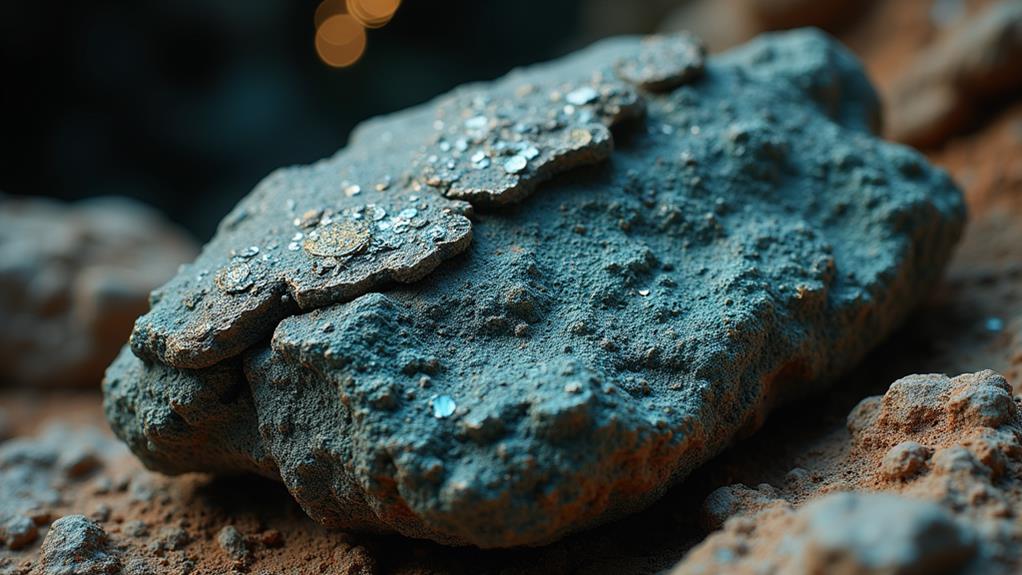
Lodestone's pronounced magnetic strength not only renders it an intriguing subject for scientific study but also enhances its market value, particularly for high-end magnetite specimens. The unique properties of lodestone contribute to a broad price spectrum, influenced by factors such as purity, size, and magnetic intensity. Additionally, the mineral's distinctive characteristics have seen it incorporated into engagement rings, where its magnetic allure adds symbolic significance.
High-end Magnetite Specimens
The allure of high-end Magnetite specimens, often hailed as Lodestone, lies in their unparalleled magnetic strength, distinguishing them as the most magnetic natural mineral on Earth. These specimens are frequently characterized by their rich black color and metallic sheen, which contribute to their aesthetic and scientific value. Found in notable deposits across Australia, Sweden, and the USA, high-end Magnetite specimens are coveted for their unique octahedral or dodecahedral crystal formations. These geometric structures not only enhance their visual appeal but also underscore the mineral's intricate natural beauty.
| Feature | Description | Significance |
|---|---|---|
| Crystal Formation | Octahedral/Dodecahedral | Enhances aesthetic appeal and structural integrity |
| Color | Rich black or brownish-black | Contributes to desirability in collections and jewelry |
| Magnetic Strength | Unparalleled, highest among natural minerals | Utilized in ancient navigation, valued in metaphysical properties |
| Key Locations | Australia, Sweden, USA | Primary sources for high-end specimens |
The historical significance of these high-end Magnetite specimens cannot be overstated. Ancient civilizations utilized their magnetic properties for navigation, a reflection of their enduring utility. In contemporary times, these specimens are cherished not only for their geological and industrial applications but also for their metaphysical properties, believed to bring balance and grounding. The intersection of scientific precision and aesthetic allure makes high-end Magnetite specimens a fascinating subject of study and admiration.
Market Value and Price Spectrum
Magnetite's market value and price spectrum are intricately tied to its magnetic strength and multifaceted applications. Lodestone, a naturally magnetic variety of magnetite, is particularly prized for its robust magnetic properties, positioning it as a sought-after material in both industrial and healing contexts. The price of magnetite can exhibit considerable variability, influenced by attributes such as size, quality, and form. Raw magnetite typically ranges from $0.10 to $0.50 per pound, whereas polished or intricately crafted specimens can command prices from $10 to $100 or more.
High-grade magnetite, with an iron content nearing 70%, is of paramount importance in steel production, driving up its market value due to its high purity and industrial utility. The broader price spectrum of magnetite is also shaped by its demand across various sectors, including construction, manufacturing, and alternative medicine. Fluctuations in global iron ore prices further impact its valuation, reflecting the interconnectedness of market dynamics.
Lodestone's unique magnetic strength not only enhances its appeal for industrial uses but also elevates its desirability among collectors and enthusiasts. This heightened interest can considerably bolster the market value of rare or aesthetically remarkable lodestone specimens, underscoring its multifaceted allure.
Magnetite in Engagement Rings
Beyond its industrial significance and market valuation, magnetite possesses unique properties that make it an intriguing choice for engagement rings. Known as Lodestone, this naturally magnetic mineral symbolizes attraction and commitment, imbuing engagement jewelry with profound meaning. Its inherent magnetism is believed to attract love and loyalty, fostering an enduring bond between partners.
Magnetite's strong magnetic properties are reputed to enhance emotional stability, thereby promoting a harmonious relationship. This aspect makes it an ideal candidate for those seeking a grounding stone that can fortify the emotional foundation of their union. As a grounding stone associated with the Base Chakra, magnetite aids in establishing a solid base for love and unity, crucial elements in any long-term commitment.
Aesthetically, magnetite's dark metallic sheen provides a striking contrast when paired with other gemstones, creating an eye-catching and unique design. This allure does not merely rest on its appearance but extends to the symbolic weight it carries. The combination of its magnetic strength and visual appeal makes magnetite an exceptional choice for engagement rings, embodying both the physical and emotional facets of a committed relationship.
Frequently Asked Questions
What Are the Healing Properties of Magnetite?
Magnetite properties include its ability to attract love, commitment, and loyalty, thereby enhancing emotional bonds and relationships. Magnetite energy alleviates negative emotions such as fear, anger, and grief, promoting emotional healing and stability. Its anti-inflammatory properties provide relief from muscle aches and respiratory issues like asthma. Additionally, Magnetite grounding aligns the chakras, particularly the Base Chakra, fostering stability. Magnetite meditation calms overactive organs and stimulates sluggish ones, contributing to overall physical balance.
What Does Magnetite Do for You?
Magnetite provides profound grounding energy, stabilizing emotions and intellect. This mineral offers protection by mitigating negative emotions such as fear and anger. During meditation, magnetite enhances focus and clarity, assisting in the attainment of personal goals. Additionally, it fosters emotional healing and supports romantic relationships by attracting love, commitment, and loyalty. The anti-inflammatory properties of magnetite also contribute to physical well-being, alleviating muscle aches and respiratory issues.
What Are the Special Properties of Magnetite?
Magnetite exhibits remarkable magnetic properties due to its unique magnetite formation, making it highly significant in geological studies. Its ability to attract iron particles is pivotal in various industrial applications, including iron ore extraction and magnetic separation processes. This mineral's robust magnetic field also aids in navigation technologies. Scientifically, magnetite's geological significance is underscored by its role in paleomagnetism, revealing historical changes in Earth's magnetic field.
How to Use Magnetite for Healing Chakras?
To harness Magnetite for chakra healing, employ Magnetite placement on the Root Chakra to achieve grounding. Utilize meditation techniques by holding or placing Magnetite to facilitate energy alignment and clear blockages. Pairing Magnetite with clear quartz or amethyst can enhance Chakra balancing. Regularly cleanse Magnetite to preserve its efficacy. Incorporating Magnetite into daily routines, such as wearing it, helps sustain balanced chakras and emotional well-being.


